Caritas Freetown Convenes Stakeholders’ Meeting for ELEVATE Youth Empowerment Project.
Caritas Freetown successfully convened a stakeholders’ meeting for the ELEVATE Project — Empowering Youth: Scaling and Integrating the Youth Readiness Intervention into Employment Promotion Programs and Schools and enhancing coping skill and substance use prevention in Sierra Leone at its coordination office in Kingtom, Freetown. The meeting brought together key partners, including representatives from the Ministry of Youth Affairs Sierra Leone, Ministry of Social Welfare, Kissi psychiatrist teaching hospital and Global Network for youth forum respectively to strengthen collaboration and enhance youth empowerment initiatives. Discussions focused on integrating youth readiness interventions into employment promotion programmes and schools to ensure young people are better equipped with skills of positive coping mechanisms, improving emotional regulation, resilience, and opportunities for sustainable livelihoods. A comprehensive overview of the project’s goals, objectives, and expected outcomes was presented by the Programs Manager (BC/Caritas). This was followed by stakeholder reflections, group discussions, and interactive engagement sessions aimed at identifying collaboration models, clarifying roles and responsibilities, and assessing resources needed for effective implementation. The meeting concluded with clear action points, renewed commitments to partnership, and strong enthusiasm to collectively advance youth development and employment readiness initiatives. Caritas Freetown appreciates the active participation of all stakeholders and looks forward to continued collaboration as partners work together to empower young people and expand opportunities for capital development in the future.
Caritas Freetown Hosts National Workshop on Scaling Early Childhood Development in Sierra Leone
Caritas Freetown, in collaboration with the Boston College School of Social Work through its Research Program on Children and Adversity, and in partnership with the Ministry of Social Welfare and the Ministry of Basic and Senior Secondary Education, convened a dissemination workshop aimed at strengthening Early Childhood Development (ECD) in Sierra Leone. The event was held on 23 April at the Swiss Spirit Hotel & Suites Freetown. The initiative seeks to advance early childhood development by translating research evidence into practical, scalable, and cost-effective programmes and policies that improve the health, well-being, and long-term outcomes of children across the country. It forms part of the multi-country “THRIVE” research programme, implemented through the Family Strengthening Intervention for Early Childhood Development and Violence Prevention (FSI-ECD+VP). The project brings together a broad coalition of stakeholders, including government institutions, researchers, local non-governmental organisations, and development partners, with the shared objective of addressing existing gaps in scaling ECD interventions from pilot phases to nationwide implementation. Key participants at the workshop included Mrs. Worokia Conteh, Director of Family Welfare at the Ministry of Social Welfare; Mrs. Melody Martin, Deputy Director at the Ministry of Basic and Senior Secondary Education; Mrs. Kate Jefferies, Education Advisor at the UK Foreign, Commonwealth and Development Office; Rev. Fr. Peter Konteh, Director of Caritas Freetown; Mr. Dauda Sesay, THRIVE (FSI) Project Manager at Caritas Freetown; Dr.Theresa Betancourt, Director of the Research Program on Children and Adversity at Boston College; and Ms. Kashiya Nwanguma, Programme Manager at the same institution. The workshop was structured into four core sessions designed to move discussions from contextual understanding to actionable strategies for scale. The first session focused on setting the context, establishing a shared understanding of Sierra Leone’s ECD landscape and policy direction. The second session examined the Family Strengthening Intervention pilot, presenting research findings and gathering feedback from frontline practitioners. The third session explored the broader institutional landscape, mapping existing government systems to avoid duplication and identify opportunities for integration. The final session centred on synergy and dialogue, with emphasis on establishing coordinated mechanisms across sectors such as health, nutrition, hygiene, education, and social protection. In conclusion, the workshop underscored a coordinated national effort to transition early childhood development initiatives in Sierra Leone from isolated pilot projects to a sustainable, nationwide framework. By aligning research evidence with government systems and community-based delivery, stakeholders reaffirmed their commitment to building an integrated approach that supports the holistic development of children and strengthens the country’s long-term human capital outcomes.
Caritas Freetown’s Hospitality Project Assesses Beneficiaries Through Practical Examination.
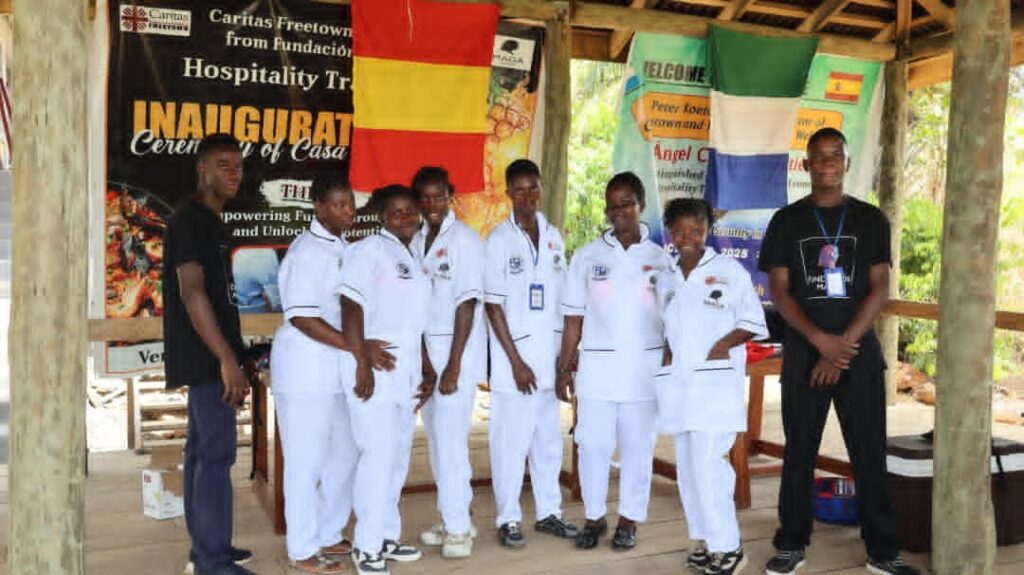
The Casa Leone Hospitality Project, supported by FUNDAĆION MAGA, has conducted a practical examination for its beneficiaries as part of efforts to evaluate and strengthen vocational skills in the hospitality sector. The assessment took place on 13th April 2026 at Bureh Town, Western Area Rural District. The examination brought together four judges who assessed participants on their practical competencies in culinary arts and mixology. The exercise formed a critical component of the project’s training framework, designed to equip beneficiaries with hands-on experience and industry-relevant skills. During the culinary segment, participants demonstrated a range of techniques in seafood preparation. Dishes presented included baked lobster served with fried rice, prawn kebab accompanied by chips and onion sauce, and pan-fried shrimps with egg white rice. The variety and presentation of the meals reflected a growing level of technical proficiency among the trainees. In the mixology segment, participants prepared a selection of both classic and creative beverages. These included well-known cocktails such as Rum and Coke and Gin and Tonic, alongside locally inspired creations like “Mama Salone” and “Ladies Love Cocktail” (LLC). The originality and presentation of these drinks contributed significantly to the overall assessment. The panel of judges, led by Project Lead Madam Isatu Sidibay, commended the participants for their creativity, attention to detail, and practical execution. Particular recognition was given to the “Mama Salone” and “Ladies Love Cocktail,” which emerged as standout presentations during the evaluation. The practical examination underscores the Casa Leone Hospitality Project’s broader objective of empowering individuals through skills development. By providing structured training and assessment, the initiative continues to enhance employment prospects and promote self-reliance among beneficiaries in the community. In conclusion, the successful conduct of the examination reflects both the effectiveness of the training programme and the potential of the participants to transition into the hospitality industry with competence and confidence.
Caritas Freetown Hosts Farewell Dinner in Honor of Rev. Sr. Josephine Amara.
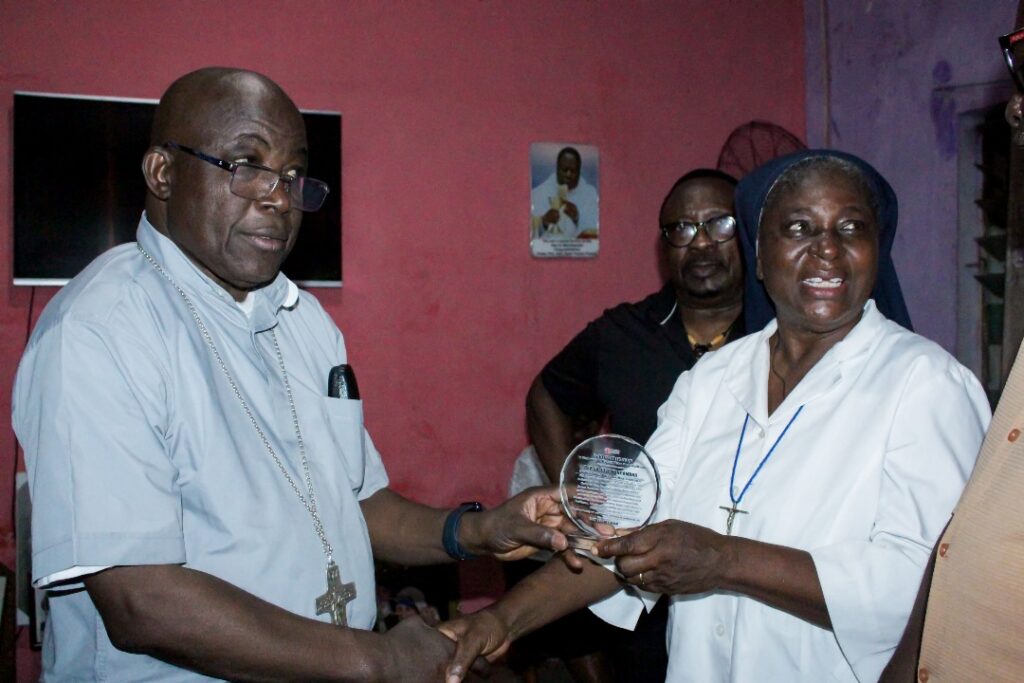
On Tuesday, October 7th, 2025, Caritas Freetown held a heartfelt Farewell Dinner Celebration in honor of Rev. Sr. Josephine Amara, whose exceptional service and compassion have greatly strengthened the organization’s health programs. The event took place at the residence of Rev. Fr. Peter Konteh, Executive Director of Caritas Freetown, in Kingtom. The evening brought together colleagues, friends, and partners to celebrate Sr. Josephine’s remarkable contributions. It was graced by the Archbishop of Freetown, His Grace Dr. Edward Tamba Charles, who delivered special remarks, and Rev. Fr. Bangura, Deputy Executive Director, who led the opening and closing prayers. Highlights of the event included a welcome address, farewell messages, and a gift presentation expressing deep appreciation for Sr. Josephine’s leadership and dedication. In his remarks, Fr. Konteh praised Sr. Josephine as “a woman of faith whose grace and commitment have left an enduring impact on Caritas Freetown’s mission and the lives of those we serve.” As the celebration concluded, attendees expressed gratitude for her years of selfless service. Sr. Josephine’s legacy of love, faith, and compassion will continue to inspire the Caritas Freetown family and the broader community.
Assessment Visit to Proposed Rehabilitation Centre in Makomba.
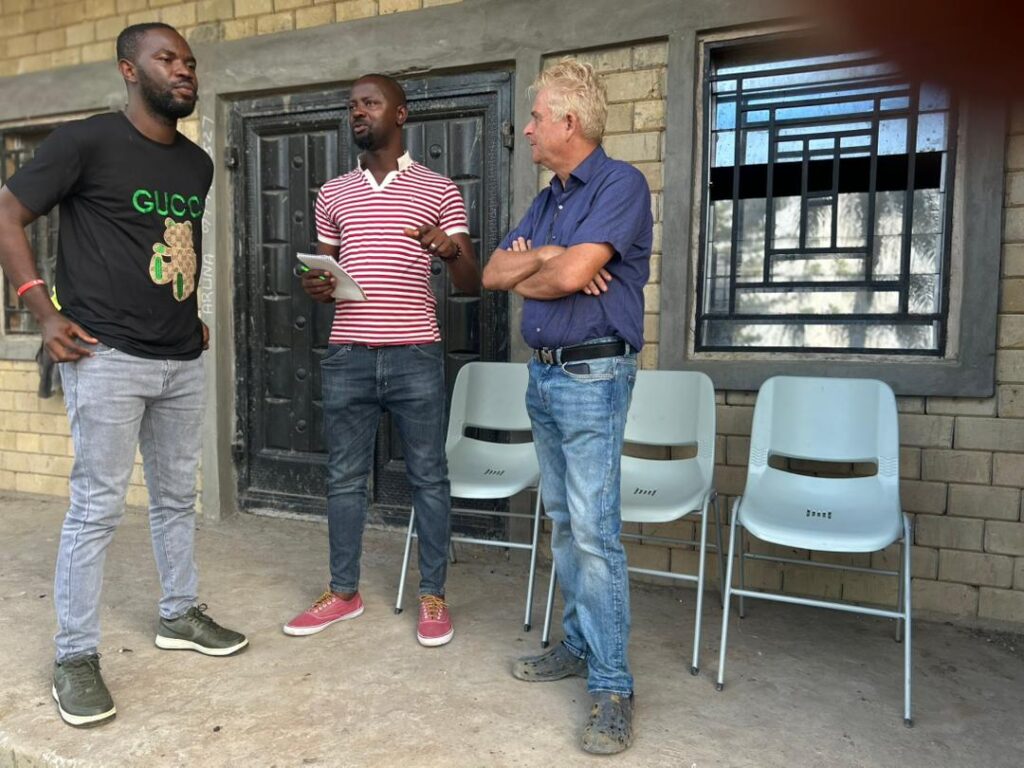
On Saturday, October 4, 2025, a team comprising Andreas Schnier, Technical Advisor at Caritas Freetown, and Daniel Gbao, Director of Children’s Affairs at the Ministry of Gender and Children’s Affairs, visited the proposed Rehabilitation Centre in Makomba to conduct a comprehensive facility assessment. The Director expressed satisfaction with the facility’s condition and preparations for its upcoming operations, while also providing key recommendations to strengthen the centre’s readiness and service framework. These insights will be compiled into a formal report for action by Caritas Freetown. This joint effort underscores Caritas Freetown’s ongoing commitment to addressing substance abuse and supporting recovery programs that restore dignity, hope, and purpose to individuals affected by addiction.
Caritas Freetown and Fundación Maga Launch Hospitality Training Center in Bureh Town.
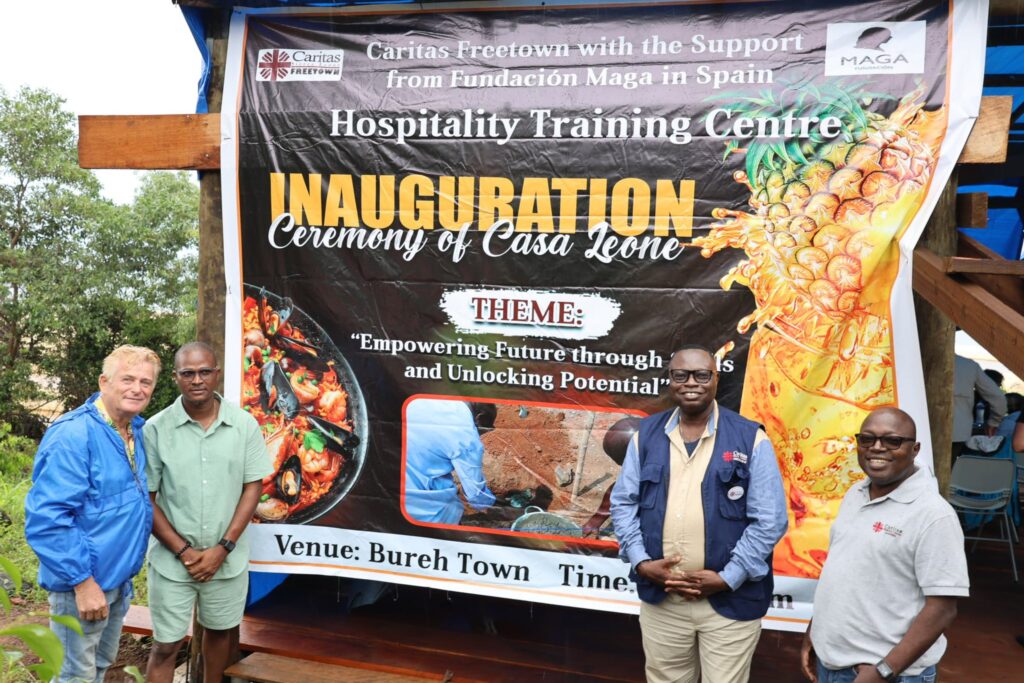
On Saturday, 28th June 2025, Caritas Freetown, with support from Fundación MAGA in Spain, officially launched a hospitality training center named CASA LEONE in Bureh Town, Western Area Urban. The launch ceremony brought together Spanish delegates, community stakeholders, residents, and staff members of Caritas Freetown. In his remarks, Ishmeal Alfred Charles, Programs Manager of Caritas Freetown, expressed gratitude to Fundación MAagA for their ongoing commitment to transforming lives in Sierra Leone. “This project will mainly provide training for vulnerable women and girls in hospitality and communication skills,” he said. He added that the initiative will not only create employment opportunities but also equip participants with essential skills for the hospitality industry. He further noted that the center will cater to both Sierra Leonean and Spanish cuisines. Charles extended thanks to the Spanish Chef Carlos, who provided hospitality training to one of the center’s operators in Spain, and appreciated those who hosted her during her training session in Spain. Rev. Father Peter Konteh, Executive Director of Caritas Freetown, also conveyed appreciation for the partnership with Fundación MAGA. “You have in a special way empowered our people, and that is going to bring transformation,” he said. He emphasized that this strong relationship could even justify the establishment of a Spanish embassy in Sierra Leone. “This is the beginning of many great things, and the relationship will continue to flourish,” he added, noting that the vision of Caritas aligns closely with that of Fundación MAGA. He concluded that the training will have a long-lasting impact, as beneficiaries will continue to pass on the knowledge to others. Speaking on behalf of Fundación MAGA, Javier highlighted the emotional significance behind the project. “This project would not have materialized if not for my late mother, in whose memory we created this charity, and the father who linked me to Sierra Leone,” he shared. Javier emphasized the project’s importance in complementing Sierra Leone’s development, especially in light of the country’s current living conditions. “With our expertise and the help of people who buy our wine and support our charity, we can make this project come true,” he stated. He thanked attendees for coming and urged them to give their time and energy to help the project succeed. Javier Gangutea Murua and his wife, Almudena Imhof Puente, officially unveiled the center, Casa Leone, under the theme: “Empowering Futures through Skills and Unlocking Potential.” The establishment of Casa Leone marks a significant step in empowering vulnerable women and girls in Sierra Leone through skills training and economic opportunity. With continued collaboration between Caritas Freetown and Fundación Maga, the center is expected to become a beacon of transformation, training future generations and fostering cross-cultural partnerships.
Business Development & Village Savings and Loan Association Training.
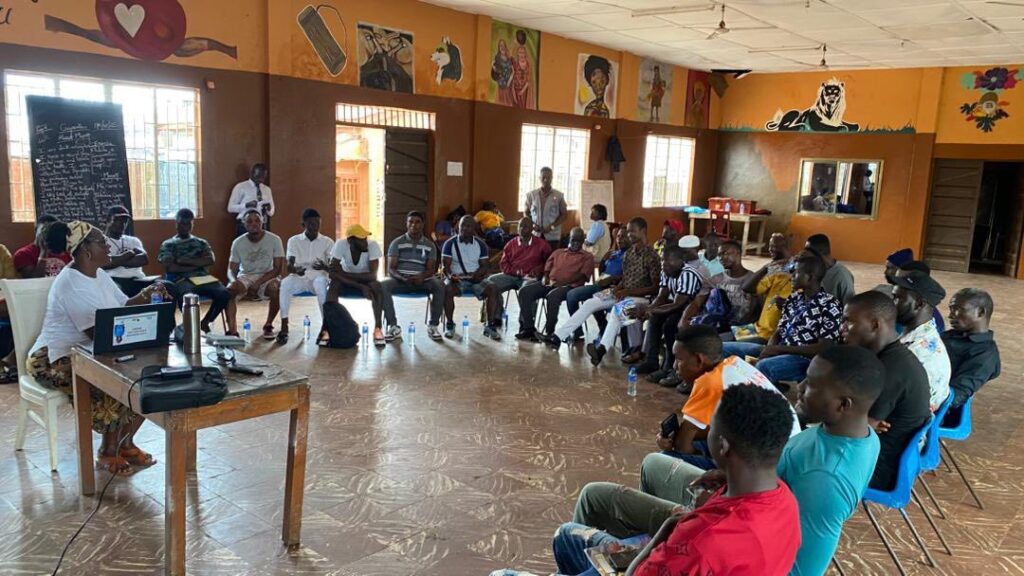
In an effort to conserve the environment while providing good, environmentally friendly livelihood activities, Caritas Freetown provide training for 30 men from the Kolleh Town and Cockle Bay communities who are transitioning from environmentally harmful livelihood activities to start up small-scale businesses. A comprehensive training on small-scale business management and Village Savings and Loan Associations (VSLA) establishment and management was done for the 30 men from the Kolleh Town and Cockle Bay communities. Training Objectives and Content The training was designed to equip participants with the essential skills needed to start and manage successful small-scale businesses. The facilitated topics include: * Business Development Skills: This section covers fundamental concepts of entrepreneurship, including how to identify viable business opportunities, create a business plan, and understand market dynamics. * Profit Maximization: Participants learnt practical strategies for managing finances, minimizing costs, and pricing goods or services to ensure profitability. * Navigating Loss and Risk: A crucial part of the training was teaching beneficiaries how to prepare for and manage business losses, and how to take calculated risks to foster business growth. This includes developing a resilient mindset and an understanding of contingency planning. * The Role of Village Savings and Loan Associations (VSLA): This component of the training was essential for financial empowerment. Participants learnt how to self-manage the establishment of VSLA groups, typically composed of 15 to 25 members, pool their savings, which then become a source of small, affordable loans for members to invest in their businesses or handle emergencies. This model enhances financial inclusion and promotes community economic development by: * Fostering a Culture of Saving, Providing Access to Credit, and Building Community Cohesion. The VSLA framework operates on mutual trust and collaboration. By combining business development skills with the practical, community-driven financial support of a VSLA, this training program empowers these men to create sustainable livelihoods, reduce their reliance on environmentally damaging activities, and contribute positively to the economic well-being of their communities. The small-scale business start-up grant was distributed to the 30 male participants at the end of the training.
Caritas Freetown JPC, with Support from Trócaire, Provides MPCA to 80 Vulnerable Households for Disaster Preparedness and Response.

On Monday, 1st September 2025, Caritas Freetown’s Justice and Peace Commission, through the Resilience Building and Disaster Mitigation for Vulnerable Communities in Western Area Urban and Rural Project funded by Trócaire, provided Multi-Purpose Cash Assistance (MPCA) to 80 vulnerable households across six communities: Kroo Bay, Culvert, Levuma Beach, Wellington, Moyiba, and New England. Each household received Le 3,460 to strengthen their preparedness against future flooding. This pilot initiative specifically targets flood-prone areas in the Western Urban and Rural districts, serving as a preventive measure. The cash support is intended to enable beneficiaries to repair or reinforce damaged homes, or, where necessary, relocate to safer ground, actions that can significantly reduce risks when flooding occurs. Speaking on behalf of Caritas Freetown, Project Manager Sheriff L. Bah explained that the assistance was grounded in a thorough needs assessment. “The beneficiaries were registered, and those most at risk were selected through a vulnerability-based focus group discussion held with community stakeholders and household heads,” he noted. He further emphasized that a post-distribution monitoring survey will soon be conducted to assess how the cash was used and to gather feedback on beneficiaries’ satisfaction with the support provided. One recipient, Kelvin Andrew Kebbie, a resident of Levuma Beach living with a disability, shared his experience. “I lost all my belongings, and part of my house was washed away by the floodwaters. It was very difficult for my family; we even had to sleep in a church because we had nowhere else to stay,” he recalled. Expressing gratitude, he added, “I am very happy to receive this support. I will use the money to repair my home. I thank Trócaire and Caritas Freetown JPC for their intervention and promise to use it for its intended purpose.” This intervention marks an important step in strengthening resilience among vulnerable households in disaster-prone areas. It underscores Caritas Freetown and Trócaire’s ongoing commitment to helping communities withstand the devastating impact of recurrent floods and fires in Sierra Leone.
Caritas Freetown Strengthens Commitment to Safeguarding the Vulnerable.
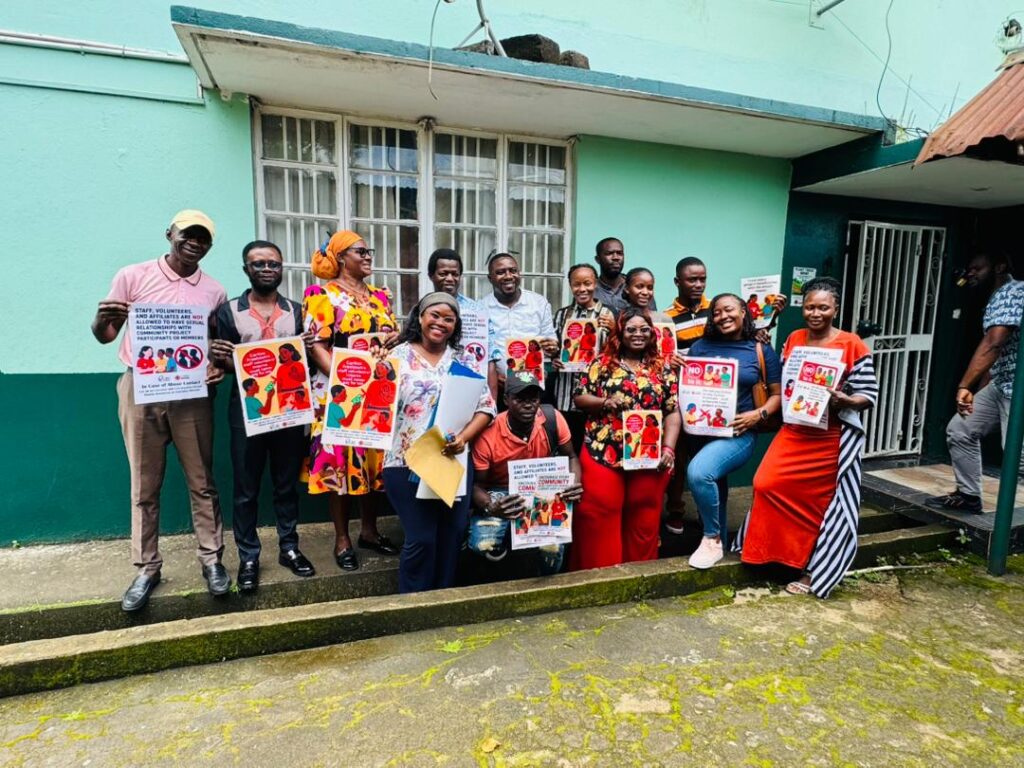
On Wednesday, 17th September 2025, Caritas Freetown organized a session on safeguarding policy. The training, held at the organization’s Field Office on Savage Street, brought together board members, project staff, and volunteers. Mrs. Grace Jones, the Safeguarding Focal Person of Caritas Freetown, explained that safeguarding goes beyond written policies. “It is a way of life that requires compassion, vigilance, and responsibility,” she said. Mrs. Jones noted that women and children are often the most at risk, facing harm, abuse, and exploitative situations that can silence them. “It is our duty to make sure they are protected, respected, and given dignity,” she added. She further emphasized that safeguarding is the collective responsibility of Caritas Freetown and its partners, project participants and affiliates to ensure people remain safe from abuse and risk of harm when receiving humanitarian assistance. The session highlighted several key lessons. Participants were reminded that protection is an aspect of safeguarding. Safeguarding the dignity and safety of women, children, and other vulnerable groups. Accountability was also underscored, with the message that safeguarding is not the duty of one department but a shared responsibility for all, from board members to volunteers. It was also made clear that abuse in any form, including exploitation, harassment, or neglect, has no place within the organization or society. To deepen understanding, participants engaged in group work, discussions, and presentations on safeguarding practices. The Session ended with a strong sense of unity and renewed determination. Participants left not just with notes but with a deeper commitment to ensuring that safeguarding remains central to the mission of Caritas Freetown.
Caritas Freetown and other development partners Observe International Day of Peace 2025.
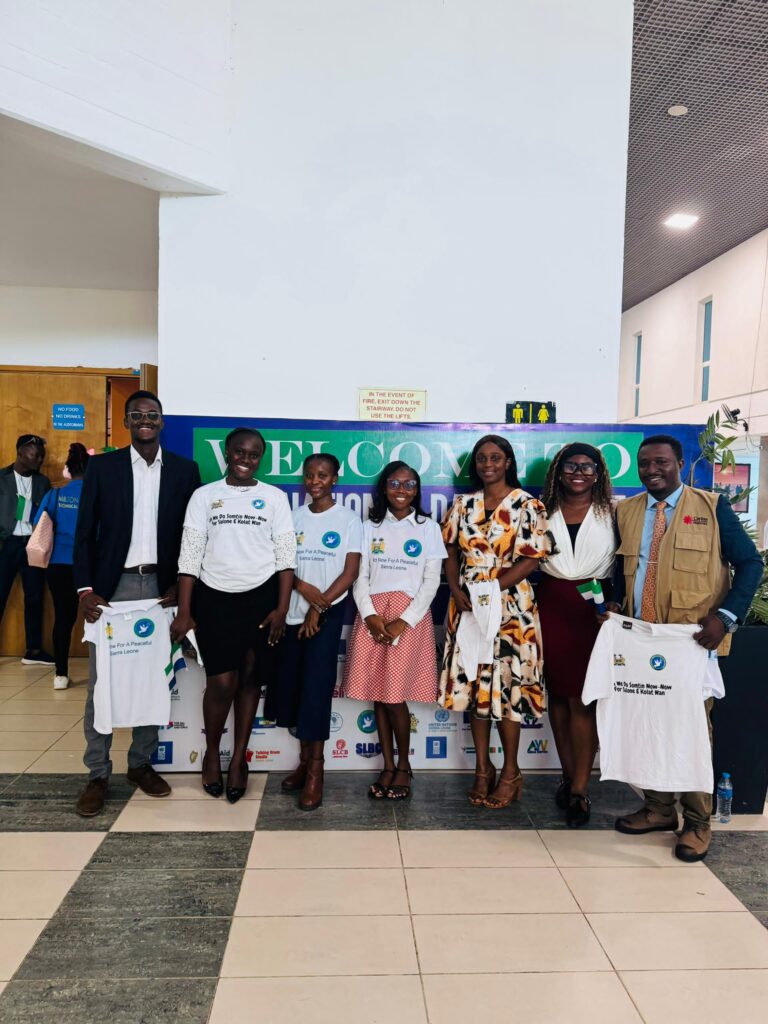
On Monday, 22nd September 2025, Sierra Leone joined the world in celebrating the International Day of Peace. The Independent Commission for Peace and National Cohesion (ICPNC) marked the occasion with a National Peace Symposium held at the Bintumani International Conference Centre in Freetown. The event brought together stakeholders from various backgrounds under the theme, “Act Now for a Peaceful Sierra Leone.” The symposium was designed to provide a platform for dialogue on how to strengthen unity and cohesion in the country. Leaders from government, religious institutions, academia, civil society, and youth organizations participated, reflecting the importance of inclusivity in peacebuilding. A panel discussion formed the centerpiece of the event, with distinguished speakers including Most Rev. Edward Tamba Charles, Archbishop of Freetown and President of the Inter-Religious Council of Sierra Leone; representatives from the Department of Peace and Conflict Studies at Fourah Bay College (FBC); the Ministry of Youth Affairs; the Women’s Forum; and the Children’s Forum Network. The discussion was moderated by James Fortune Esq. and created space for perspectives across generations and sectors. Archbishop Tamba Charles, in his contribution, emphasized the critical role of faith-based leaders in conflict mediation and the promotion of tolerance. Drawing on examples of the Inter-Religious Council’s interventions in times of national tension, he highlighted the importance of dialogue, healing, and reconciliation. He further reminded participants that peace begins with individual responsibility, stressing that religious leaders must continue to use their influence to guide communities toward unity, forgiveness, and mutual respect. According to him, peace cannot be defined solely as the absence of conflict but rather as the presence of justice, fairness, and inclusivity. The symposium also underscored the shared responsibility of different sectors in building and sustaining peace. Participants stressed the need for joint efforts among government, civil society, religious institutions, women, youth, and children to create a cohesive society. As discussions concluded, a collective call was made for immediate action to address critical challenges such as youth unemployment, political polarization, gender inequality, social injustice, and community divisions. The commemoration of the International Day of Peace 2025 was not merely a ceremonial event but a timely reminder of the urgent need for collective action. It reaffirmed that peace is everyone’s responsibility and must be nurtured through justice, inclusivity, and unity. By bringing together diverse voices under one roof, the symposium highlighted that Sierra Leone’s future depends on the willingness of all its citizens to act now for a peaceful and prosperous nation.