Caritas Freetown Board Visits Kush Rehabilitation Centre, Reaffirms Commitment to Youth Recovery
The growing abuse of the deadly synthetic drug known as “kush” continues to destroy the lives of young people across Sierra Leone, particularly in Freetown and surrounding communities. The dangerous substance, commonly made from a mixture of tramadol, cannabis, and synthetic cannabinoids, has become a major public health crisis, leaving many young girls homeless and vulnerable to exploitation, violence, family rejection, and the loss of educational and economic opportunities. In response to the growing epidemic, Caritas Freetown established the Rehabilitation and Empowerment of Youth Affected by Drugs (REAR) Project to provide long-term rehabilitation, counselling, healing, and empowerment opportunities for young people struggling with addiction. As part of efforts to strengthen support for the initiative, the Board Chairman of Caritas Freetown, Archbishop Edward Tamba Charles, together with board members and management staff, paid an official visit to the REAR rehabilitation centre at Makomba Village, off Newton, on Tuesday, May 26, 2026. The purpose of the visit was to assess the progress of the project, interact with staff and beneficiaries, and reaffirm Caritas Freetown’s commitment to helping young people recover from substance abuse and successfully reintegrate into society.The rehabilitation centre provides psychological care, counselling, rehabilitation services, and vocational skills training for young people affected by kush addiction. During the visit, board members engaged directly with beneficiaries to better understand the impact of the programme and the challenges faced by recovering youth. Among those present during the visit were Rev. Fr. Peter Konteh, Thomas Sheku Kenah, and Peter Menjor, alongside other representatives and staff of Caritas Freetown. Between January and May 2026, sixteen young girls were enrolled in the residential rehabilitation programme at Makomba Village. Out of the sixteen beneficiaries, twelve are currently on track for successful reintegration into society through counselling, rehabilitation, and vocational skills training. One of the twelve beneficiaries, Esther Mustapha, shared her emotional story of addiction and recovery during the visit.Esther explained that after successfully passing both the National Primary School Examination (NPSE) and the Basic Education Certificate Examination (BECE), she was unable to continue her education because her father could not afford her school fees. During that difficult period, a friend introduced her to kush. She later moved from Bo to Freetown without family support, where her addiction worsened. To survive and sustain her dependency on the drug, she engaged in survival sex work and often slept in gutters and shop verandas, facing severe hardship and exploitation. “The project has given me the courage to reintegrate into society and pursue a productive future. It has helped me become a person in society again,” Esther said. Her journey toward recovery began when she was identified by a Caritas project staff member in Funkia and referred to the rehabilitation programme. Through counselling, psychological support, and vocational training, she successfully stopped using kush. She is currently receiving tailoring training at the centre and rebuilding her life with renewed hope and confidence. Her story demonstrates the importance of early intervention, community referrals, professional rehabilitation services, and vocational empowerment in helping young people recover from addiction and rebuild their lives. Speaking to staff and beneficiaries during the visit, Archbishop Edward Tamba Charles expressed appreciation to the project team for their dedication and commitment to restoring hope among vulnerable young people. He also commended the beneficiaries for choosing the path of recovery and transformation despite the many challenges they have faced. The Archbishop described the initiative as an important effort in restoring dignity, healing, and hope to young people affected by drug addiction. He emphasized that the project reflects Caritas Freetown’s mission of supporting vulnerable individuals to rebuild their lives and become productive members of society. Delivering the vote of thanks on behalf of the staff and beneficiaries, Murray Massaquoi, the project Manager of the REAR project, thanked the board members and guests for their continued support. He noted that the visit strengthened the confidence and motivation of both staff and recovering youth at the rehabilitation centre. The visit highlighted Caritas Freetown’s continued leadership in addressing substance abuse and strengthening rehabilitation programmes for vulnerable young people across Sierra Leone. Through compassion, professional care, counselling, and empowerment opportunities, the REAR Project continues to restore hope, dignity, and a second chance to young people affected by drug addiction.
Casa Leone Hospitality Project Holds First Graduation Ceremony in Bureh Town
The Casa Leone Hospitality Project, sponsored by Fundación MAGA and implemented by Caritas Freetown, on Wednesday, 20th May 2026, held its first graduation ceremony at the Casa Leone Hospitality Training Center in Bureh Town. The event commenced with a procession by the graduates, followed by prayers offered in thanksgiving for the successful occasion. Delivering the welcome address, Eliza Sillah, Programs Manager of Caritas Freetown thanked attendees for their presence and expressed appreciation to Fundación MAGA for supporting the hospitality project and making the first graduation ceremony possible. Giving an overview of the training centre, Project Coordinator Andreas Schnier said he was pleased to witness people from different parts of the country attending the ceremony. He noted that the journey had not been easy but emphasized that the project remained a success despite some challenges encountered along the way. He further disclosed that, with the support of the Ministry of Tourism and Cultural Affairs and other partners, internship opportunities had been secured for graduates at various hospitality establishments across the country. He concluded by stating that the overall implementation of the project had been successful. Speaking at the event, Idrissa Thonkla Bangura from the Ministry of Tourism and Cultural Affairs commended the Casa Leone Hospitality Project for the initiative. He stated that tourism plays a vital role in accelerating economic growth, as reflected in the Government’s Midterm Development Plan. According to him, sectors such as tourism, agriculture, and fisheries possess significant potential to improve Sierra Leone’s economy, referencing countries that have achieved remarkable economic progress through tourism development. He encouraged the graduates to uphold good customer service, describing it as the backbone of the tourism industry. Representing the Board of Caritas Freetown and serving as the focal person for the Casa Leone Hospitality Project, Dr. Robert Moigowa welcomed guests and thanked them for attending the occasion. He described the work of Caritas Freetown as an important complement to government efforts in supporting vulnerable communities. He stated that the ceremony was not only intended to celebrate the achievements of Casa Leone, but also to send a strong message to the community that the project is sustainable and committed to long-term impact. He thanked the partners and coordinators for their dedication in making the centre successful and congratulated the graduates, encouraging them to work hard so their achievements would inspire others. In his keynote address, Rev. Fr. Peter Konteh stated that the graduation ceremony represented more than academic achievement, describing it as a symbol of transformation and hope. He observed that Sierra Leone continues to face serious social and economic challenges, particularly youth unemployment, which often exposes young people to social vices such as drug addiction, robbery, and prostitution. He explained that the Casa Leone Hospitality Project was established to equip young people with life skills capable of opening doors to employment and self-reliance. He added that the graduates would leave the institution with knowledge, confidence, and renewed purpose. Rev. Fr. Konteh encouraged them to remain disciplined, hardworking, and committed in their future endeavors. He also expressed appreciation to Fundación MAGA, government partners, the project management team, the Board and staff of Caritas Freetown, and all those who contributed to making the hospitality training centre fully operational. The graduates expressed excitement and gratitude for the opportunity provided to them and pledged to work diligently in order to excel within the tourism industry and inspire others to pursue careers in the sector. One of the graduates, Lansana Conteh, expressed appreciation for the opportunity, noting that he never imagined he would benefit from such training. He promised to work hard and make productive use of the skills acquired. In conclusion, the first graduation ceremony of the Casa Leone Hospitality Project marked a significant milestone in empowering young people through vocational and hospitality training in Sierra Leone. The initiative continues to demonstrate the importance of partnerships in promoting skills development, employment opportunities, and sustainable community growth, while contributing to the advancement of the country’s tourism sector.
Caritas Freetown Launches Youth Community Advisory Board on Child Mental Health Research.
The Research Department of Caritas Freetown has officially launched its Youth Community Advisory Board (CAB) as part of a project titled “Social and Biological Mechanisms Driving the Impact of War on Child Mental Health.” The inaugural consultative meeting was held at the Caritas Freetown Development Office, located at 19 Savage Street, Brookfields, Freetown. It brought together youth practitioners drawn from various institutions across the Western Area Municipality. The meeting served as an introductory platform to orientate participants on the project’s objectives, scope, and implementation approach, while also fostering collaboration among key youth stakeholders. A total of 12 CAB members, nominated by their respective institutions, were selected to provide strategic input and meaningful contributions to the planning and implementation of the project. The session was officially opened by the Caritas Freetown Programs Manager, who welcomed participants and presented an overview of the Youth Readiness Intervention (YRI) and the GCC Elevate Project. This was followed by a detailed presentation from the Caritas Team Lead, who outlined the YRI Elevate framework and emphasized the roles of both government and non-governmental partner organizations in the project’s implementation. During the discussions, CAB members expressed strong commitment to advancing youth empowerment initiatives and provide candid opinions to support the adaptation of substance-use prevention mechanisms aimed at addressing prevailing mental health challenges among young people in Sierra Leone. Participants were also oriented on the project’s study design, research protocols, and collaborative implementation strategies to ensure ethical and effective engagement throughout the project lifecycle. The Youth Community Advisory Board pledged to provide thoughtful, informed, and impactful contributions toward the successful implementation of the GCC Project and the realization of its overall vision to improve child and youth mental health outcomes.
FSI-ECD+VP Project Holds Community Advisory Board Meeting to Strengthen Early Childhood Development and Violence Prevention Intervention
The Family Strengthening Intervention, Early Childhood Development and Violence Prevention Project (FSI-ECD+VP), with support from Boston College, today convened a Community Advisory Board (CAB) meeting at the Caritas Freetown Field Office, Brookfields. The meeting brought together 10 distinguished experts in Early Childhood Development (ECD), CAB members, and project staff to review progress and provide strategic guidance for strengthening and expanding the intervention. The meeting aimed to gather expert insights and feedback on the ongoing ECD intervention, assess its effectiveness, identify strengths and gaps, and develop practical strategies to ensure sustainability, cultural relevance, and long-term impact of the project. Key discussions focused on practical strategies to help caregivers, both male and female, manage stress and frustration within the home environment. Participants also examined early warning signs that interventionists should monitor when caregiver stress begins to pose potential risks to children and family wellbeing. The CAB further explored existing gaps in parenting interventions, particularly the limited participation of male caregivers. Discussions highlighted possible reasons for low male involvement and proposed strategies to encourage their engagement in future project roll-outs. Another major area of discussion centered on contextualizing the FSI-ECD+VP intervention to suit diverse communities. Participants emphasized the importance of cultural relevance, local context adaptation, and community ownership in ensuring effective implementation. Experts commended several positive outcomes of the intervention, noting that training sessions for educators and caregivers have strengthened local capacity, improved knowledge of early childhood development, and enhanced the delivery of supportive services for vulnerable families. However, while the overall progress was viewed positively, the CAB emphasized the need for stronger multi-sectoral collaboration among government institutions, NGOs, and community stakeholders. Participants also recommended reinforcing monitoring and evaluation frameworks to guide adaptive learning, ensure accountability, and sustain project impact beyond initial implementation phases. The CAB meeting reaffirmed the commitment of Caritas Freetown, Boston College, and stakeholders to promoting safe, nurturing environments for children while strengthening family resilience and community support systems across intervention communities.
Caritas Freetown Convenes Stakeholders’ Meeting for ELEVATE Youth Empowerment Project.
Caritas Freetown successfully convened a stakeholders’ meeting for the ELEVATE Project — Empowering Youth: Scaling and Integrating the Youth Readiness Intervention into Employment Promotion Programs and Schools and enhancing coping skill and substance use prevention in Sierra Leone at its coordination office in Kingtom, Freetown. The meeting brought together key partners, including representatives from the Ministry of Youth Affairs Sierra Leone, Ministry of Social Welfare, Kissi psychiatrist teaching hospital and Global Network for youth forum respectively to strengthen collaboration and enhance youth empowerment initiatives. Discussions focused on integrating youth readiness interventions into employment promotion programmes and schools to ensure young people are better equipped with skills of positive coping mechanisms, improving emotional regulation, resilience, and opportunities for sustainable livelihoods. A comprehensive overview of the project’s goals, objectives, and expected outcomes was presented by the Programs Manager (BC/Caritas). This was followed by stakeholder reflections, group discussions, and interactive engagement sessions aimed at identifying collaboration models, clarifying roles and responsibilities, and assessing resources needed for effective implementation. The meeting concluded with clear action points, renewed commitments to partnership, and strong enthusiasm to collectively advance youth development and employment readiness initiatives. Caritas Freetown appreciates the active participation of all stakeholders and looks forward to continued collaboration as partners work together to empower young people and expand opportunities for capital development in the future.
Caritas Freetown Hosts National Workshop on Scaling Early Childhood Development in Sierra Leone
Caritas Freetown, in collaboration with the Boston College School of Social Work through its Research Program on Children and Adversity, and in partnership with the Ministry of Social Welfare and the Ministry of Basic and Senior Secondary Education, convened a dissemination workshop aimed at strengthening Early Childhood Development (ECD) in Sierra Leone. The event was held on 23 April at the Swiss Spirit Hotel & Suites Freetown. The initiative seeks to advance early childhood development by translating research evidence into practical, scalable, and cost-effective programmes and policies that improve the health, well-being, and long-term outcomes of children across the country. It forms part of the multi-country “THRIVE” research programme, implemented through the Family Strengthening Intervention for Early Childhood Development and Violence Prevention (FSI-ECD+VP). The project brings together a broad coalition of stakeholders, including government institutions, researchers, local non-governmental organisations, and development partners, with the shared objective of addressing existing gaps in scaling ECD interventions from pilot phases to nationwide implementation. Key participants at the workshop included Mrs. Worokia Conteh, Director of Family Welfare at the Ministry of Social Welfare; Mrs. Melody Martin, Deputy Director at the Ministry of Basic and Senior Secondary Education; Mrs. Kate Jefferies, Education Advisor at the UK Foreign, Commonwealth and Development Office; Rev. Fr. Peter Konteh, Director of Caritas Freetown; Mr. Dauda Sesay, THRIVE (FSI) Project Manager at Caritas Freetown; Dr.Theresa Betancourt, Director of the Research Program on Children and Adversity at Boston College; and Ms. Kashiya Nwanguma, Programme Manager at the same institution. The workshop was structured into four core sessions designed to move discussions from contextual understanding to actionable strategies for scale. The first session focused on setting the context, establishing a shared understanding of Sierra Leone’s ECD landscape and policy direction. The second session examined the Family Strengthening Intervention pilot, presenting research findings and gathering feedback from frontline practitioners. The third session explored the broader institutional landscape, mapping existing government systems to avoid duplication and identify opportunities for integration. The final session centred on synergy and dialogue, with emphasis on establishing coordinated mechanisms across sectors such as health, nutrition, hygiene, education, and social protection. In conclusion, the workshop underscored a coordinated national effort to transition early childhood development initiatives in Sierra Leone from isolated pilot projects to a sustainable, nationwide framework. By aligning research evidence with government systems and community-based delivery, stakeholders reaffirmed their commitment to building an integrated approach that supports the holistic development of children and strengthens the country’s long-term human capital outcomes.
Caritas Freetown’s Hospitality Project Assesses Beneficiaries Through Practical Examination.
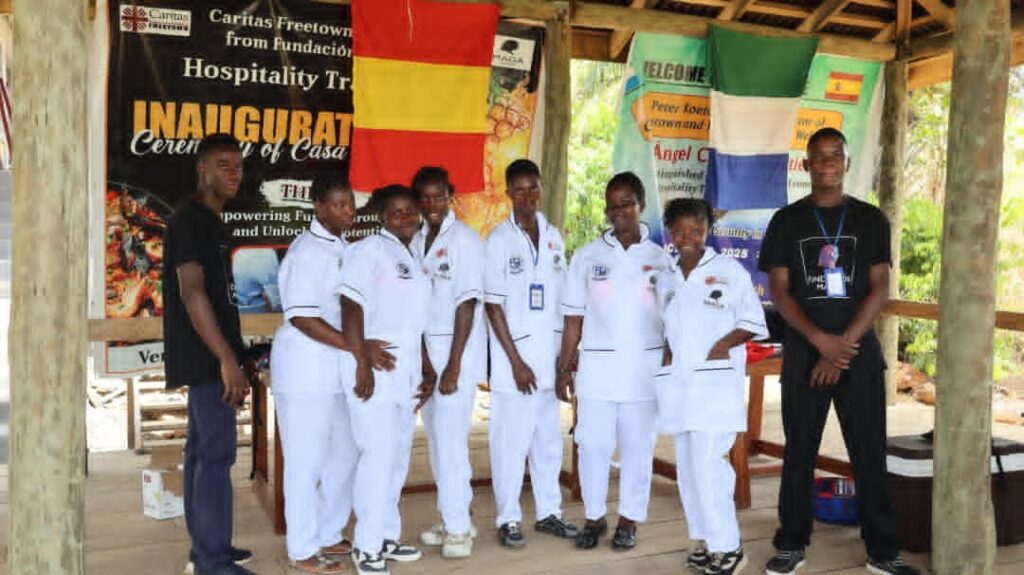
The Casa Leone Hospitality Project, supported by FUNDAĆION MAGA, has conducted a practical examination for its beneficiaries as part of efforts to evaluate and strengthen vocational skills in the hospitality sector. The assessment took place on 13th April 2026 at Bureh Town, Western Area Rural District. The examination brought together four judges who assessed participants on their practical competencies in culinary arts and mixology. The exercise formed a critical component of the project’s training framework, designed to equip beneficiaries with hands-on experience and industry-relevant skills. During the culinary segment, participants demonstrated a range of techniques in seafood preparation. Dishes presented included baked lobster served with fried rice, prawn kebab accompanied by chips and onion sauce, and pan-fried shrimps with egg white rice. The variety and presentation of the meals reflected a growing level of technical proficiency among the trainees. In the mixology segment, participants prepared a selection of both classic and creative beverages. These included well-known cocktails such as Rum and Coke and Gin and Tonic, alongside locally inspired creations like “Mama Salone” and “Ladies Love Cocktail” (LLC). The originality and presentation of these drinks contributed significantly to the overall assessment. The panel of judges, led by Project Lead Madam Isatu Sidibay, commended the participants for their creativity, attention to detail, and practical execution. Particular recognition was given to the “Mama Salone” and “Ladies Love Cocktail,” which emerged as standout presentations during the evaluation. The practical examination underscores the Casa Leone Hospitality Project’s broader objective of empowering individuals through skills development. By providing structured training and assessment, the initiative continues to enhance employment prospects and promote self-reliance among beneficiaries in the community. In conclusion, the successful conduct of the examination reflects both the effectiveness of the training programme and the potential of the participants to transition into the hospitality industry with competence and confidence.
Caritas Freetown Hosts Farewell Dinner in Honor of Rev. Sr. Josephine Amara.
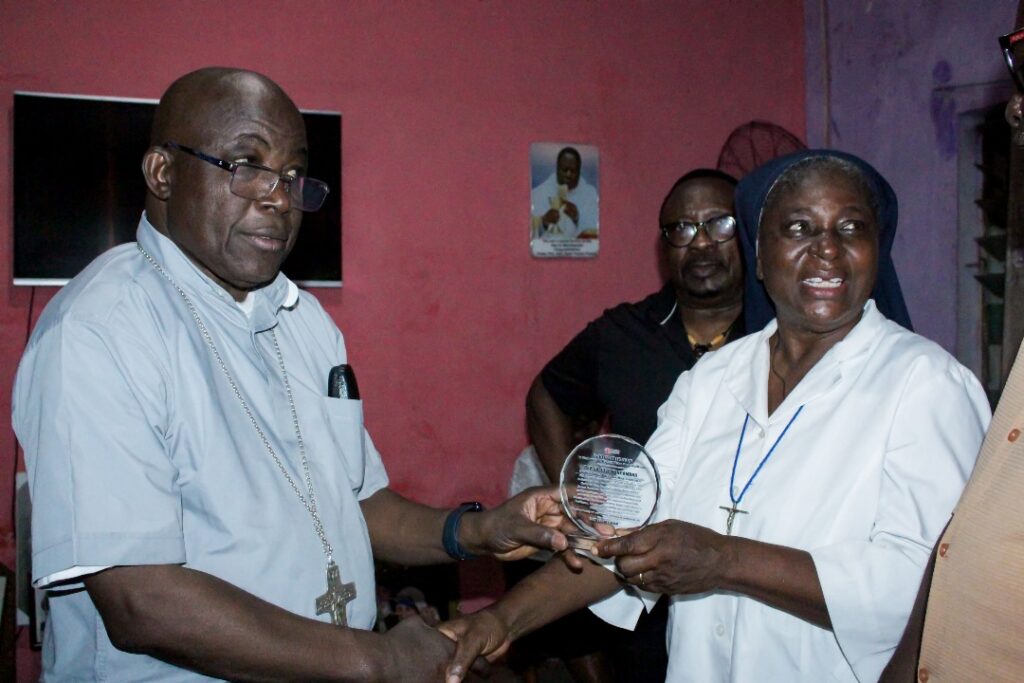
On Tuesday, October 7th, 2025, Caritas Freetown held a heartfelt Farewell Dinner Celebration in honor of Rev. Sr. Josephine Amara, whose exceptional service and compassion have greatly strengthened the organization’s health programs. The event took place at the residence of Rev. Fr. Peter Konteh, Executive Director of Caritas Freetown, in Kingtom. The evening brought together colleagues, friends, and partners to celebrate Sr. Josephine’s remarkable contributions. It was graced by the Archbishop of Freetown, His Grace Dr. Edward Tamba Charles, who delivered special remarks, and Rev. Fr. Bangura, Deputy Executive Director, who led the opening and closing prayers. Highlights of the event included a welcome address, farewell messages, and a gift presentation expressing deep appreciation for Sr. Josephine’s leadership and dedication. In his remarks, Fr. Konteh praised Sr. Josephine as “a woman of faith whose grace and commitment have left an enduring impact on Caritas Freetown’s mission and the lives of those we serve.” As the celebration concluded, attendees expressed gratitude for her years of selfless service. Sr. Josephine’s legacy of love, faith, and compassion will continue to inspire the Caritas Freetown family and the broader community.
Assessment Visit to Proposed Rehabilitation Centre in Makomba.
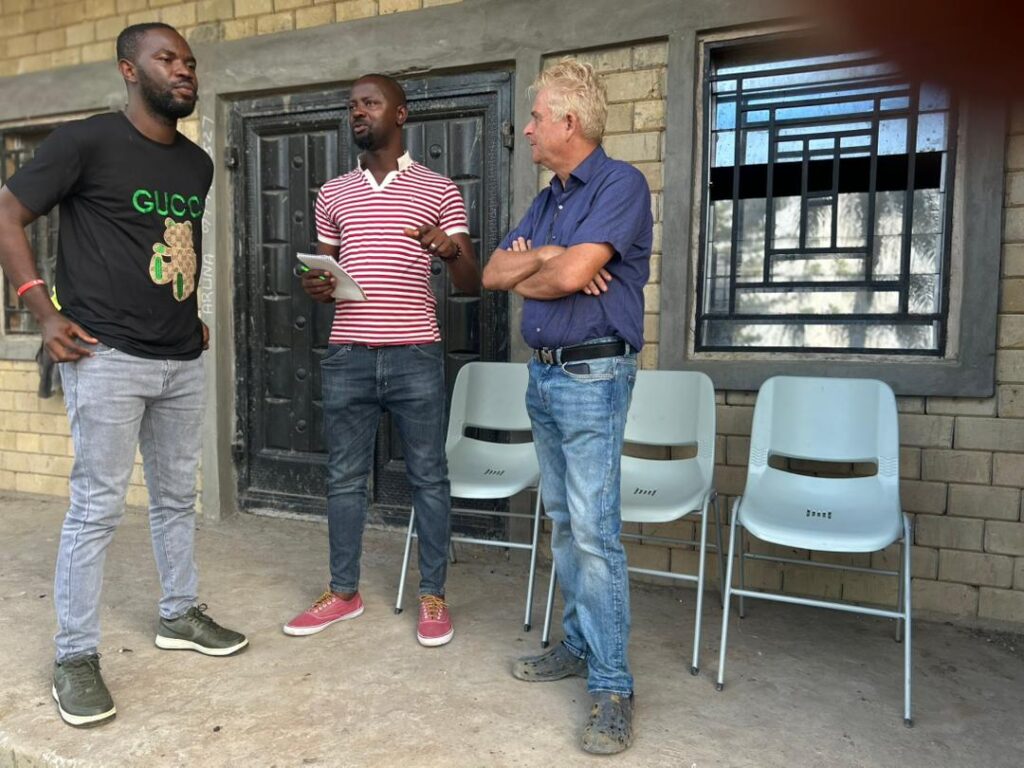
On Saturday, October 4, 2025, a team comprising Andreas Schnier, Technical Advisor at Caritas Freetown, and Daniel Gbao, Director of Children’s Affairs at the Ministry of Gender and Children’s Affairs, visited the proposed Rehabilitation Centre in Makomba to conduct a comprehensive facility assessment. The Director expressed satisfaction with the facility’s condition and preparations for its upcoming operations, while also providing key recommendations to strengthen the centre’s readiness and service framework. These insights will be compiled into a formal report for action by Caritas Freetown. This joint effort underscores Caritas Freetown’s ongoing commitment to addressing substance abuse and supporting recovery programs that restore dignity, hope, and purpose to individuals affected by addiction.
Caritas Freetown and Fundación Maga Launch Hospitality Training Center in Bureh Town.
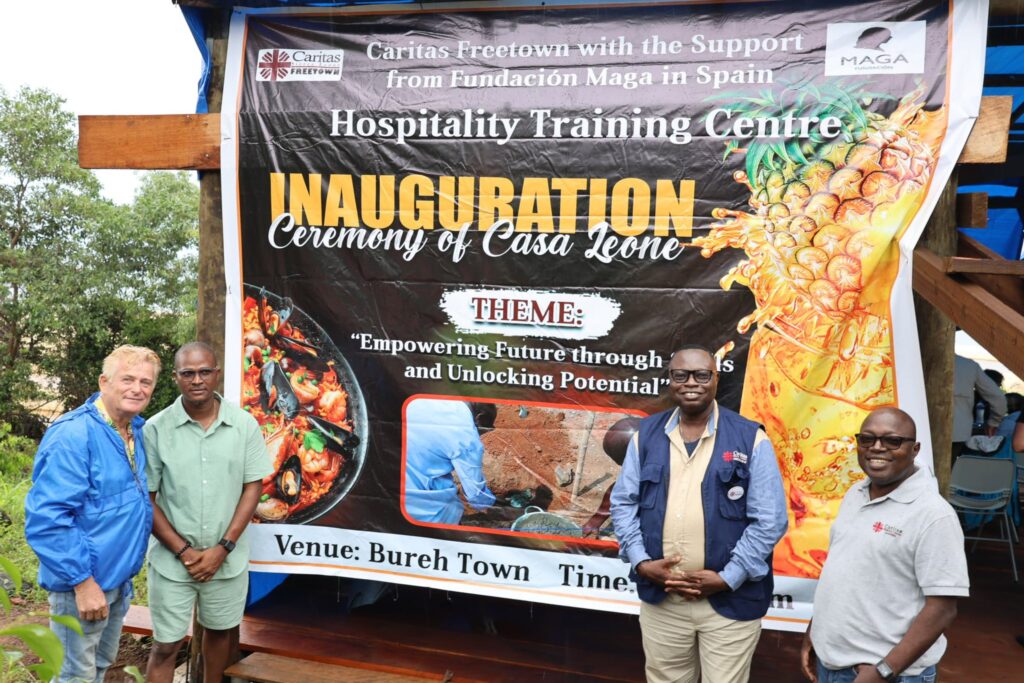
On Saturday, 28th June 2025, Caritas Freetown, with support from Fundación MAGA in Spain, officially launched a hospitality training center named CASA LEONE in Bureh Town, Western Area Urban. The launch ceremony brought together Spanish delegates, community stakeholders, residents, and staff members of Caritas Freetown. In his remarks, Ishmeal Alfred Charles, Programs Manager of Caritas Freetown, expressed gratitude to Fundación MAagA for their ongoing commitment to transforming lives in Sierra Leone. “This project will mainly provide training for vulnerable women and girls in hospitality and communication skills,” he said. He added that the initiative will not only create employment opportunities but also equip participants with essential skills for the hospitality industry. He further noted that the center will cater to both Sierra Leonean and Spanish cuisines. Charles extended thanks to the Spanish Chef Carlos, who provided hospitality training to one of the center’s operators in Spain, and appreciated those who hosted her during her training session in Spain. Rev. Father Peter Konteh, Executive Director of Caritas Freetown, also conveyed appreciation for the partnership with Fundación MAGA. “You have in a special way empowered our people, and that is going to bring transformation,” he said. He emphasized that this strong relationship could even justify the establishment of a Spanish embassy in Sierra Leone. “This is the beginning of many great things, and the relationship will continue to flourish,” he added, noting that the vision of Caritas aligns closely with that of Fundación MAGA. He concluded that the training will have a long-lasting impact, as beneficiaries will continue to pass on the knowledge to others. Speaking on behalf of Fundación MAGA, Javier highlighted the emotional significance behind the project. “This project would not have materialized if not for my late mother, in whose memory we created this charity, and the father who linked me to Sierra Leone,” he shared. Javier emphasized the project’s importance in complementing Sierra Leone’s development, especially in light of the country’s current living conditions. “With our expertise and the help of people who buy our wine and support our charity, we can make this project come true,” he stated. He thanked attendees for coming and urged them to give their time and energy to help the project succeed. Javier Gangutea Murua and his wife, Almudena Imhof Puente, officially unveiled the center, Casa Leone, under the theme: “Empowering Futures through Skills and Unlocking Potential.” The establishment of Casa Leone marks a significant step in empowering vulnerable women and girls in Sierra Leone through skills training and economic opportunity. With continued collaboration between Caritas Freetown and Fundación Maga, the center is expected to become a beacon of transformation, training future generations and fostering cross-cultural partnerships.