Business Development & Village Savings and Loan Association Training.
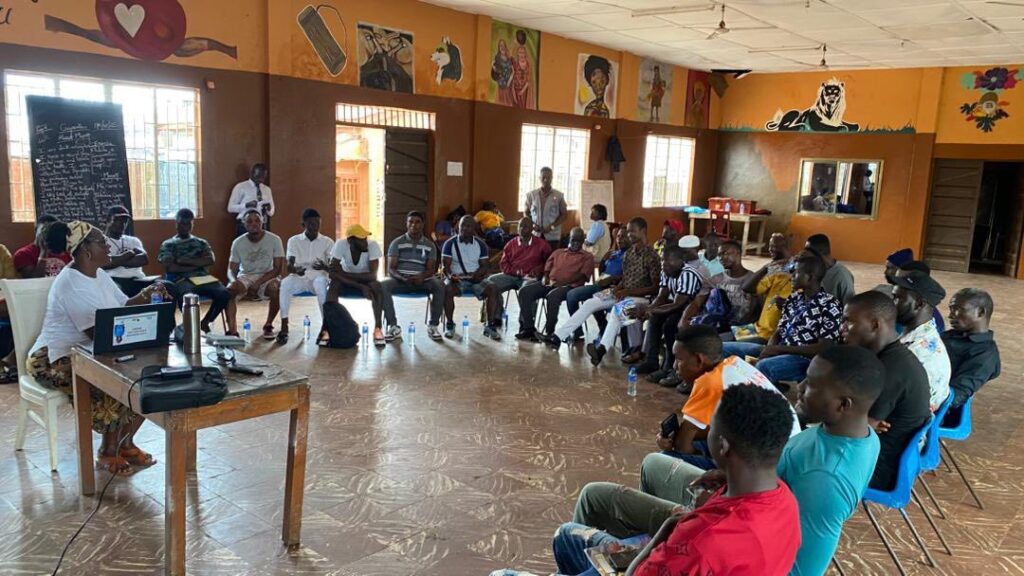
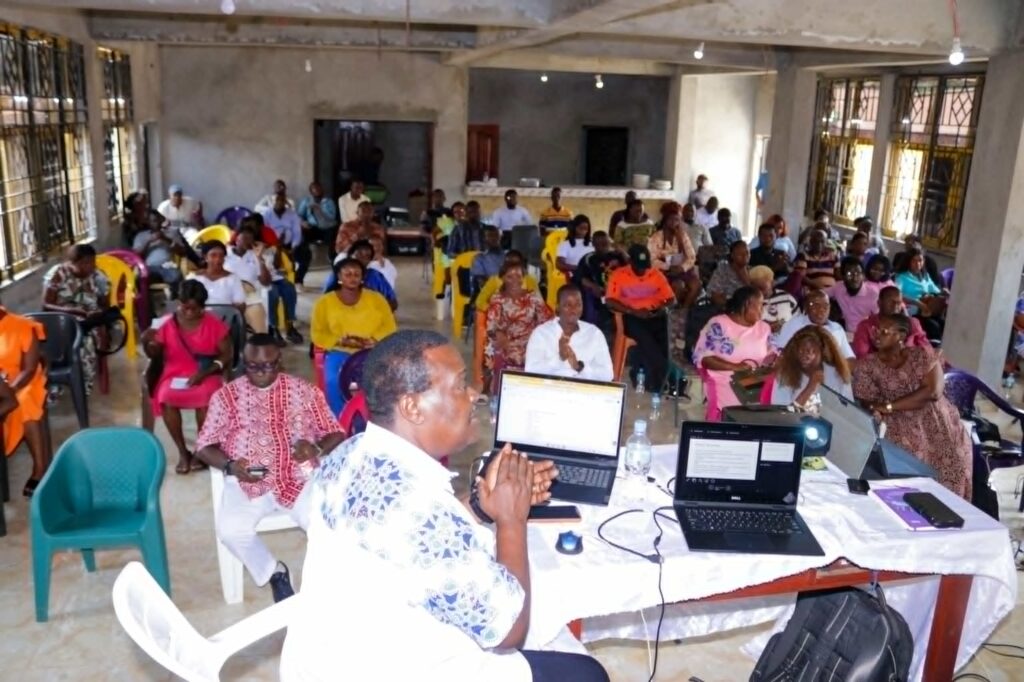
In an effort to conserve the environment while providing good, environmentally friendly livelihood activities, Caritas Freetown provide training for 30 men from the Kolleh Town and Cockle Bay communities who are transitioning from environmentally harmful livelihood activities to start up small-scale businesses. A comprehensive training on small-scale business management and Village Savings and Loan Associations (VSLA) establishment and management was done for the 30 men from the Kolleh Town and Cockle Bay communities. Training Objectives and Content The training was designed to equip participants with the essential skills needed to start and manage successful small-scale businesses. The facilitated topics include: * Business Development Skills: This section covers fundamental concepts of entrepreneurship, including how to identify viable business opportunities, create a business plan, and understand market dynamics. * Profit Maximization: Participants learnt practical strategies for managing finances, minimizing costs, and pricing goods or services to ensure profitability. * Navigating Loss and Risk: A crucial part of the training was teaching beneficiaries how to prepare for and manage business losses, and how to take calculated risks to foster business growth. This includes developing a resilient mindset and an understanding of contingency planning. * The Role of Village Savings and Loan Associations (VSLA): This component of the training was essential for financial empowerment. Participants learnt how to self-manage the establishment of VSLA groups, typically composed of 15 to 25 members, pool their savings, which then become a source of small, affordable loans for members to invest in their businesses or handle emergencies. This model enhances financial inclusion and promotes community economic development by: * Fostering a Culture of Saving, Providing Access to Credit, and Building Community Cohesion. The VSLA framework operates on mutual trust and collaboration. By combining business development skills with the practical, community-driven financial support of a VSLA, this training program empowers these men to create sustainable livelihoods, reduce their reliance on environmentally damaging activities, and contribute positively to the economic well-being of their communities. The small-scale business start-up grant was distributed to the 30 male participants at the end of the training.
Caritas Freetown JPC, with Support from Trócaire, Provides MPCA to 80 Vulnerable Households for Disaster Preparedness and Response.

On Monday, 1st September 2025, Caritas Freetown’s Justice and Peace Commission, through the Resilience Building and Disaster Mitigation for Vulnerable Communities in Western Area Urban and Rural Project funded by Trócaire, provided Multi-Purpose Cash Assistance (MPCA) to 80 vulnerable households across six communities: Kroo Bay, Culvert, Levuma Beach, Wellington, Moyiba, and New England. Each household received Le 3,460 to strengthen their preparedness against future flooding. This pilot initiative specifically targets flood-prone areas in the Western Urban and Rural districts, serving as a preventive measure. The cash support is intended to enable beneficiaries to repair or reinforce damaged homes, or, where necessary, relocate to safer ground, actions that can significantly reduce risks when flooding occurs. Speaking on behalf of Caritas Freetown, Project Manager Sheriff L. Bah explained that the assistance was grounded in a thorough needs assessment. “The beneficiaries were registered, and those most at risk were selected through a vulnerability-based focus group discussion held with community stakeholders and household heads,” he noted. He further emphasized that a post-distribution monitoring survey will soon be conducted to assess how the cash was used and to gather feedback on beneficiaries’ satisfaction with the support provided. One recipient, Kelvin Andrew Kebbie, a resident of Levuma Beach living with a disability, shared his experience. “I lost all my belongings, and part of my house was washed away by the floodwaters. It was very difficult for my family; we even had to sleep in a church because we had nowhere else to stay,” he recalled. Expressing gratitude, he added, “I am very happy to receive this support. I will use the money to repair my home. I thank Trócaire and Caritas Freetown JPC for their intervention and promise to use it for its intended purpose.” This intervention marks an important step in strengthening resilience among vulnerable households in disaster-prone areas. It underscores Caritas Freetown and Trócaire’s ongoing commitment to helping communities withstand the devastating impact of recurrent floods and fires in Sierra Leone.
Caritas Freetown Strengthens Commitment to Safeguarding the Vulnerable.
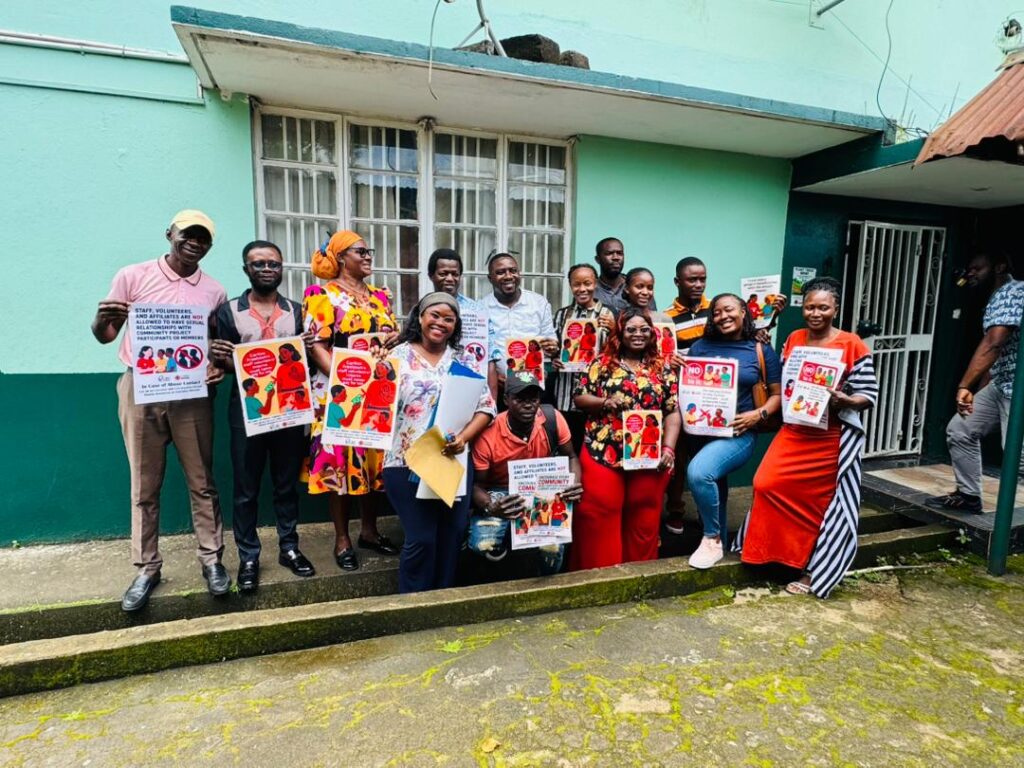
On Wednesday, 17th September 2025, Caritas Freetown organized a session on safeguarding policy. The training, held at the organization’s Field Office on Savage Street, brought together board members, project staff, and volunteers. Mrs. Grace Jones, the Safeguarding Focal Person of Caritas Freetown, explained that safeguarding goes beyond written policies. “It is a way of life that requires compassion, vigilance, and responsibility,” she said. Mrs. Jones noted that women and children are often the most at risk, facing harm, abuse, and exploitative situations that can silence them. “It is our duty to make sure they are protected, respected, and given dignity,” she added. She further emphasized that safeguarding is the collective responsibility of Caritas Freetown and its partners, project participants and affiliates to ensure people remain safe from abuse and risk of harm when receiving humanitarian assistance. The session highlighted several key lessons. Participants were reminded that protection is an aspect of safeguarding. Safeguarding the dignity and safety of women, children, and other vulnerable groups. Accountability was also underscored, with the message that safeguarding is not the duty of one department but a shared responsibility for all, from board members to volunteers. It was also made clear that abuse in any form, including exploitation, harassment, or neglect, has no place within the organization or society. To deepen understanding, participants engaged in group work, discussions, and presentations on safeguarding practices. The Session ended with a strong sense of unity and renewed determination. Participants left not just with notes but with a deeper commitment to ensuring that safeguarding remains central to the mission of Caritas Freetown.
Caritas Freetown and other development partners Observe International Day of Peace 2025.
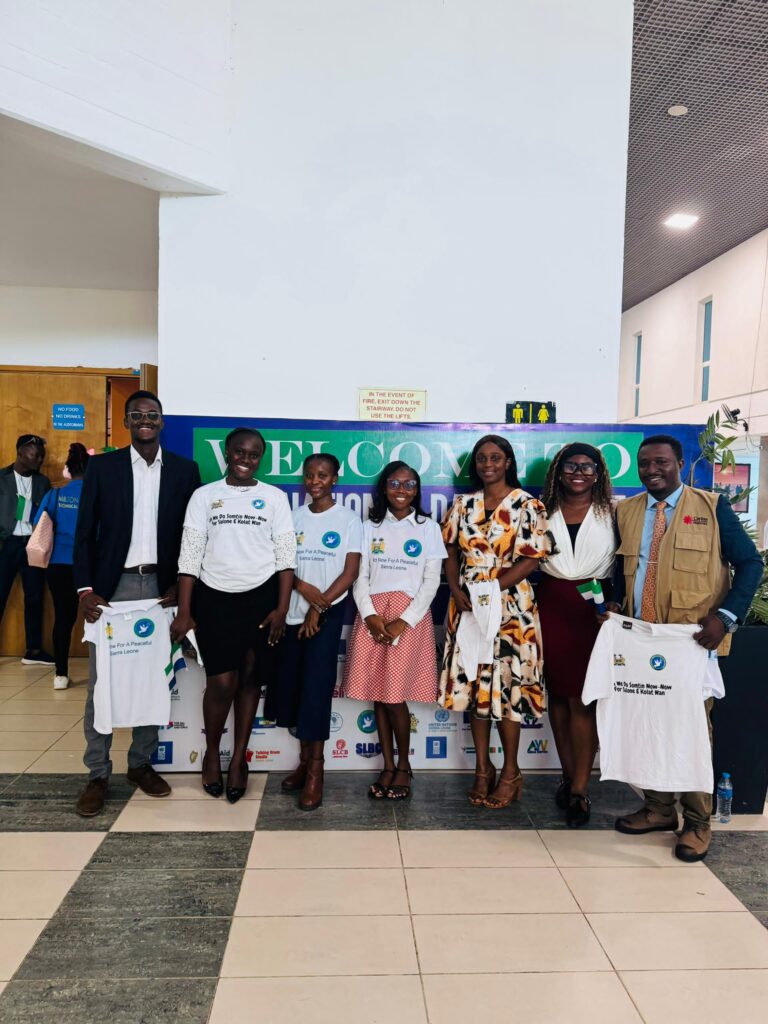
On Monday, 22nd September 2025, Sierra Leone joined the world in celebrating the International Day of Peace. The Independent Commission for Peace and National Cohesion (ICPNC) marked the occasion with a National Peace Symposium held at the Bintumani International Conference Centre in Freetown. The event brought together stakeholders from various backgrounds under the theme, “Act Now for a Peaceful Sierra Leone.” The symposium was designed to provide a platform for dialogue on how to strengthen unity and cohesion in the country. Leaders from government, religious institutions, academia, civil society, and youth organizations participated, reflecting the importance of inclusivity in peacebuilding. A panel discussion formed the centerpiece of the event, with distinguished speakers including Most Rev. Edward Tamba Charles, Archbishop of Freetown and President of the Inter-Religious Council of Sierra Leone; representatives from the Department of Peace and Conflict Studies at Fourah Bay College (FBC); the Ministry of Youth Affairs; the Women’s Forum; and the Children’s Forum Network. The discussion was moderated by James Fortune Esq. and created space for perspectives across generations and sectors. Archbishop Tamba Charles, in his contribution, emphasized the critical role of faith-based leaders in conflict mediation and the promotion of tolerance. Drawing on examples of the Inter-Religious Council’s interventions in times of national tension, he highlighted the importance of dialogue, healing, and reconciliation. He further reminded participants that peace begins with individual responsibility, stressing that religious leaders must continue to use their influence to guide communities toward unity, forgiveness, and mutual respect. According to him, peace cannot be defined solely as the absence of conflict but rather as the presence of justice, fairness, and inclusivity. The symposium also underscored the shared responsibility of different sectors in building and sustaining peace. Participants stressed the need for joint efforts among government, civil society, religious institutions, women, youth, and children to create a cohesive society. As discussions concluded, a collective call was made for immediate action to address critical challenges such as youth unemployment, political polarization, gender inequality, social injustice, and community divisions. The commemoration of the International Day of Peace 2025 was not merely a ceremonial event but a timely reminder of the urgent need for collective action. It reaffirmed that peace is everyone’s responsibility and must be nurtured through justice, inclusivity, and unity. By bringing together diverse voices under one roof, the symposium highlighted that Sierra Leone’s future depends on the willingness of all its citizens to act now for a peaceful and prosperous nation.
Caritas Freetown and Manos Unidas Deliver Emergency Relief to Fire Victims in Freetown.
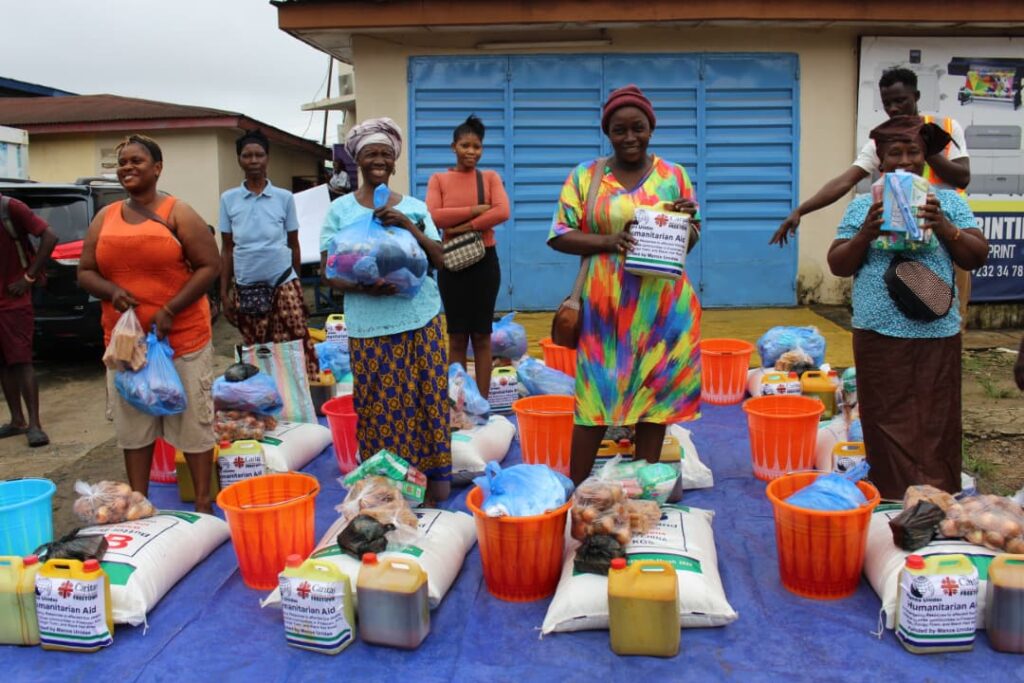
Freetown, August 6, 2025, Caritas Freetown, with funding from Manos Unidas, a Spanish Catholic NGO, provided emergency relief on Tuesday to 106 victims of recent fire disasters in three Freetown communities: Kroo Bay, Congo Town, and Black Hall Road. The distribution ceremony took place at the Caritas Freetown headquarters in Kingtom, where beneficiaries received a package of essential food and non-food items. Each recipient was given a 50kg bag of rice, one gallon of vegetable oil, one gallon of palm oil, onions, a packet of Maggi seasoning, and salt. Non-food items included a rubber bucket, laundry soap, scented soap, a lappa (traditional garment for women), sanitary pads, batteries, toothpaste, and toothbrushes. In his remarks, Ishmeal Alfred Charles, Programs Manager of Caritas Freetown, expressed empathy for the victims and apologized for the delay in distribution. “We were scheduled to begin at 10 a.m. sharp, but due to unforeseen logistical delays and the rain, we started at 11,” Charles explained. “I want to extend my heartfelt sympathy to those affected by this tragic fire and flooding. As we often say, no amount of support can replace what you’ve lost, but we hope this relief brings some comfort.” He also cited international banking challenges as a cause of the delay in delivering the aid. “We believe everything happens in its own time, and perhaps this was the right moment for you to receive this help,” he added. Charles emphasized that the aid was specifically targeted at victims of the recent fire incidents in the three communities. He expressed gratitude to Manos Unidas for their continued partnership and unwavering support. He introduced Manos Unidas to the audience as a long-standing partner of Caritas Freetown. “Manos Unidas is a Catholic Church-based organization in Spain dedicated to fighting poverty and promoting development. They focus on tackling the root causes of poverty, such as injustice, limited access to resources, and poor education,” Charles said. He also shared a brief history of the organization, explaining that Manos Unidas originated from the Campaign Against Hunger, launched in 1959 by Catholic Action Women in Spain. “Their mission is to fight hunger, poverty, disease, and illiteracy while empowering communities through sustainable development rooted in dignity and justice,” he added. Also speaking at the event was Councillor Samuel Kamara of the Freetown City Council, who expressed appreciation for the intervention. “Caritas Freetown has always stood by our communities in times of disaster,” he said. “Even though the FCC may not always have the resources to respond directly, we rely on organizations like Caritas to provide the much-needed support to our people.” Kamara reassured beneficiaries of the organization’s commitment. “Sometimes when Caritas comes around to collect data and then leaves, people assume nothing will come out of it. But this is not fraud, as with some other organizations, we are seeing the results today. I’ll be reporting to the Mayor that this was a well-executed response. Thank you, Caritas, and thank you, Manos Unidas,” he concluded. Among the beneficiaries was Kadiatu Fofanah, a resident of Kroo Bay, who emotionally recalled how her life changed in an instant. “I had just left home to attend to my small business when I heard my house was on fire,” she recounted. “At first, I couldn’t believe it. But when I got there, everything was gone. I couldn’t save a single item—not even my phone or personal belongings.” Kadiatu expressed deep gratitude upon receiving her relief package. “This is the first real help I’ve received since the fire,” she said through tears. “Caritas and Manos Unidas have given me hope again. May God bless them.” The emergency response highlights Caritas Freetown’s ongoing commitment to supporting vulnerable communities in times of crisis. It also reflects the power of strong local-international partnerships in responding effectively to disasters across Freetown. Sinneh Mansaray, Director of Relief and Response at the National Disaster Management Agency (NDMA), commended Caritas Freetown’s efforts: “Caritas is one of our key partners, consistently mobilizing support from their wide network of generous donors whenever there is a need. They are here today because of the vital assistance they are providing to several of our affected communities—specifically Congo Town, Black Hall Road, and Kroo Bay. These communities represent 106 households, with an average of five to six members per household.” He noted Caritas Freetown’s track record in the Western Area: “When it comes to disaster response, Caritas has performed exceptionally well. That’s why we conduct joint assessments with them in affected communities to identify and prioritize urgent needs.”
Activity: Flood Preparedness Needs Assessment Training for Multiple Purpose Cash Assistance Support.
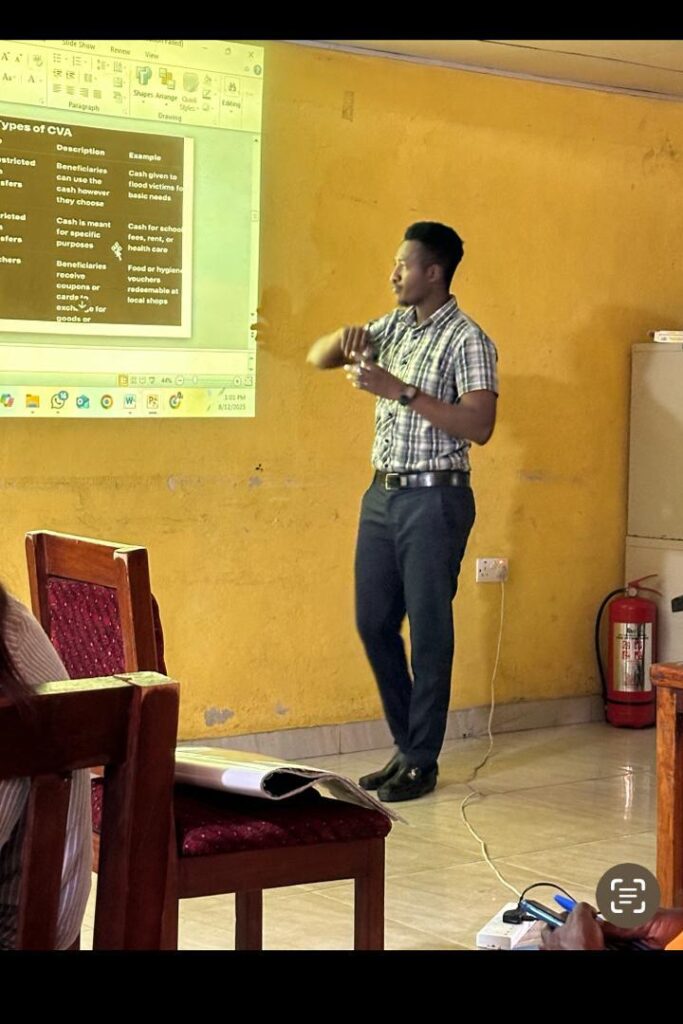
Date: 12th August 2025Donor: TrócaireImplementing Partner: Caritas FreetownProject: Resilience Building & Disaster Mitigation for Vulnerable Communities in Freetown, Sierra LeoneOrganization: Caritas Freetown As part of the Resilience Building & Disaster Mitigation for Vulnerable Communities project, Caritas Freetown, with support from Trócaire, conducted a short needs assessment training for project volunteers. The exercise aimed to identify the urgent needs of targeted vulnerable communities to prevent floods, and to equip volunteers with the skills required for efficient and accurate data collection. The training focused on the use of the developed Kobo Collect survey tool. Trainers provided an overview of the survey questionnaire, explaining the correct administration process to ensure effective communication between volunteers and respondents. The sample size for the needs assessment covered 67 households across Culvert, Kroo Bay, Wellington, Levuma communities & etc. After completing the simulations, volunteers were divided into groups and dispatched to their assigned communities to begin data collection. Key Outcomes of the Training:
8th Annual Interfaith Dialogue Promotes Unity and Compassion
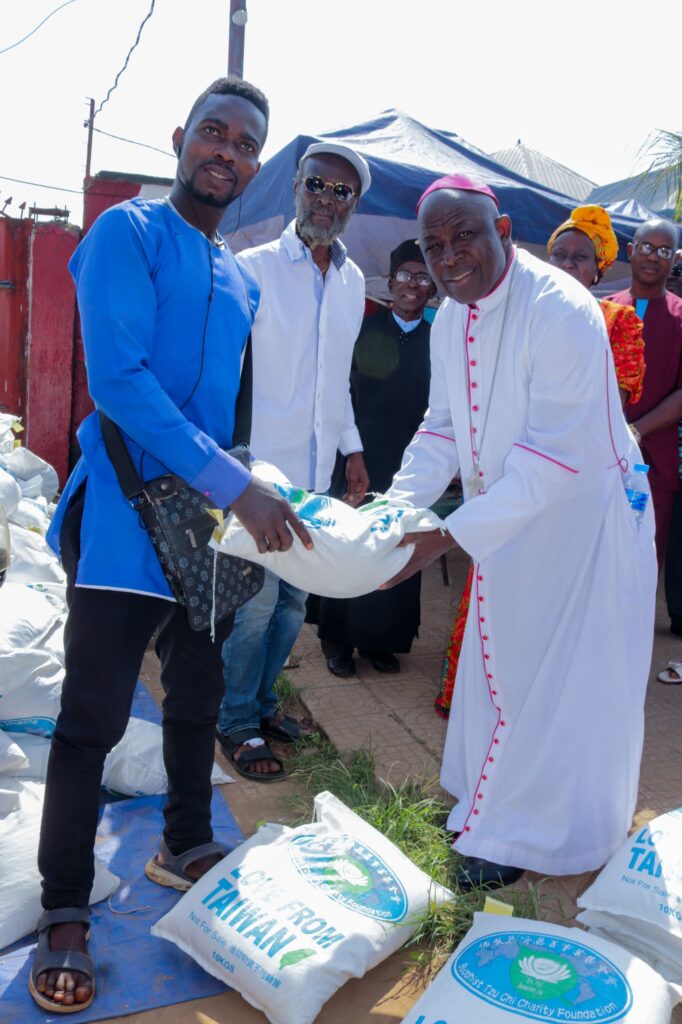
The 8th Annual Interfaith Dialogue, held on December 19, 2024, at Culture Radio in Freetown, united religious leaders and communities from diverse faiths to celebrate Sierra Leone’s legacy of religious tolerance. Organized by the Tzu Chi Buddhist Foundation in partnership with the Partnering to Serve Humanity Consortium, the event focused on the theme “Spiritual Growth, Compassion, and Peace Building.” Key speakers, including Archbishop Dr. Edward Tamba Charles, Sheik Abubakar Fomba-Swarray, and Deputy Minister of Social Welfare Mohamed Haji Kella, highlighted the importance of love, compassion, and unity in addressing societal challenges. A major act of kindness during the event saw 3,050 vulnerable individuals receiving 30 kilograms of rice each. Reflecting on the initiative’s growth, Ishmeal Alfred Charles of Caritas Freetown emphasized the role of interfaith dialogue in promoting peace and compassion. The event concluded with calls for continued tolerance and efforts to build a harmonious society, reaffirming the shared responsibility of all faiths to uplift the vulnerable.
Caritas Freetown Hosts Stakeholders’ Dialogue on Sexual and Gender-Based Violence
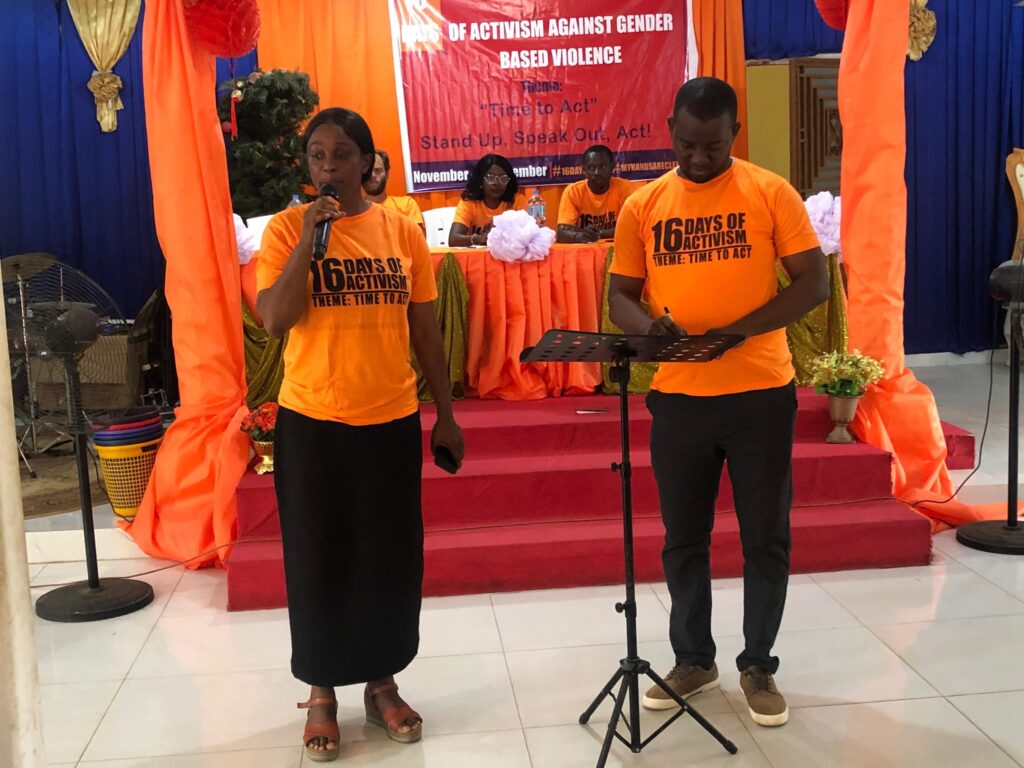
In observance of the 16 Days of Activism Against Gender-Based Violence, Caritas Freetown, in collaboration with the Community of Practice and funded by Civil Peace Service Agiamondo, organized a Stakeholders’ Dialogue on Sexual and Gender-Based Violence (SGBV) and Gender Justice on December 10, 2024, at Gateway Evangelical Church Hall in Jui. The event, themed “Time to Act,” brought together key stakeholders, service providers, and community leaders to address SGBV issues and promote gender justice. Eliza Sillah, one of the organizers, emphasized the need for a collective effort to end violence against women and girls, while Samuel Byrne, Chairman of the Community of Practice, stressed the importance of understanding and finding sustainable solutions. Tobias Grosse from Agiamondo shared alarming statistics, urging attendees to envision a world free from violence. Derick Peter, Monitoring & Evaluation Officer, highlighted the need for victim rehabilitation and reintegration into society. Other speakers, including Rita K. Foday from the Ministry of Basic and Secondary School Education and Mohamed S. Kamara from the Legal Aid Board, stressed the importance of tackling violence in schools and ensuring justice for women and girls. The dialogue concluded with a renewed commitment to collaborate in ending sexual and gender-based violence in Sierra Leone.
Caritas Freetown Reflects on 2024 and Plans for 2025
On January 14, 2024, Caritas Freetown held a significant Day of Evaluation and Open Year Mass, providing an opportunity to reflect on the achievements and challenges of the past year while setting the stage for the upcoming year. Guided by the sentiment that “an unexamined life is not worth living,” participants engaged in meaningful discussions about their community outreach and humanitarian initiatives from 2023. Celebrating their successes, they also acknowledged the hurdles they faced, emphasizing the importance of learning from these experiences. The gathering focused not only on reflection but also on envisioning a brighter future. Collaborative discussions led to the establishment of ambitious yet achievable goals for 2024, reinforcing Caritas Freetown’s commitment to uplifting and empowering communities. Gratitude was expressed for the unwavering support of partners and volunteers, which fuels their mission. Special thanks were given to Mr. Bull for his facilitation, which helped the team navigate their reflections effectively. Stay tuned for updates on upcoming initiatives and opportunities to get involved in making a positive impact in the lives of those they serve.
Celebrating Excellence in Service and Youth Empowerment!

Caritas Freetown was honored with a prestigious award from the Sierra Leone Association of NGOs (#SLANGO). This recognition underscores our commitment and significant contributions to empowering the youth sector in Sierra Leone. The award, endorsed by the Minister of Planning and Economic Development, was presented by Madam Melrose Karminty, the Minister of Social Welfare, during a meaningful ceremony attended by numerous NGOs, government officials, and diplomats. Together, we are dedicated to empowering young people, upholding their dignity, and educating them about their rights and responsibilities. A heartfelt thank you to everyone who supports our mission! 💪✨ CaritasFreetown #YouthEmpowerment #SLANGO #SocialWelfare #TogetherWeRise