The Archdoicese of Freetown, in Collaboration with Caritas Freetown, Launches New Project to Tackle Sexual and Gender-Based Violence Using a Socio-Pastoral Approach
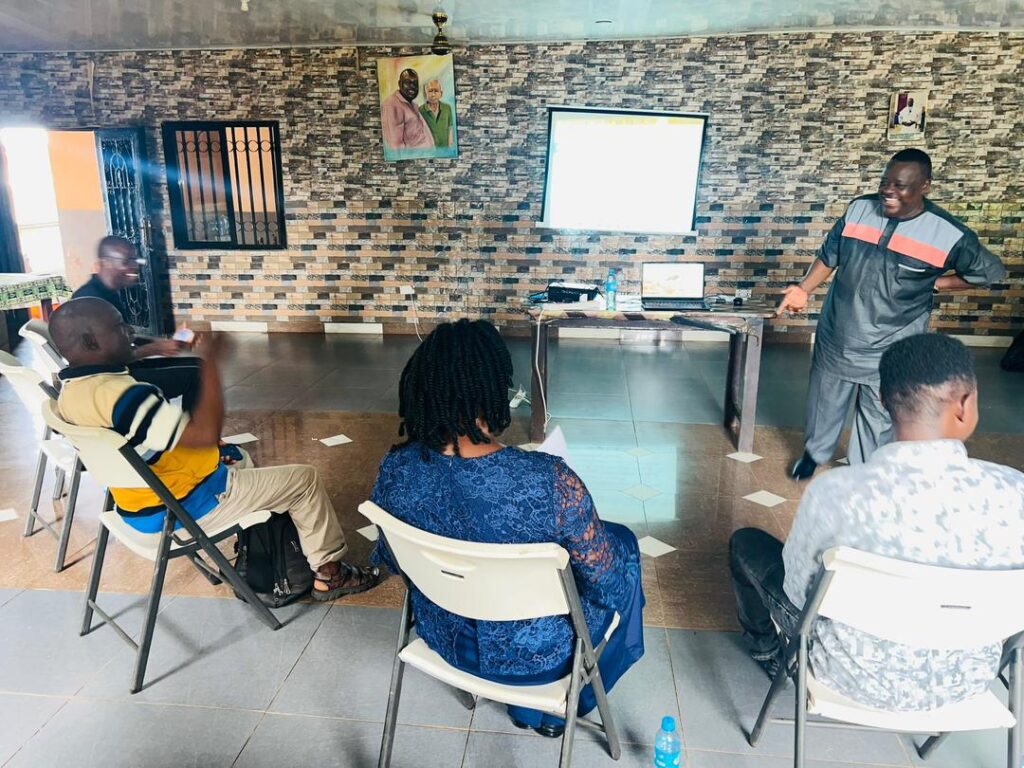
The Archdoicese of Freetown in collaboration with Caritas Freetown launched the project “Together for Equality: Socio-Pastoral Approach in Preventing and Responding to Sexual and Gender-Based Violence (SGBV) in Catholic Parishes and Institutions of Learning in the Archdoicese of Freetown” at St. Mary’s Home, River No. 2. The project, implemented by Caritas Freetown and owned by the Archdiocese of Freetown, aims to prevent and respond to sexual and gender-based violence in Catholic parishes and institutions of learning within the Archdiocese. The launch served as an orientation for the proposed project staff and laid out plans for the official start in October 2024. The project is specifically designed to tackle SGBV using a socio-pastoral approach, emphasizing dialogue and engagement with small Christian communities in the Archdoicese of Freetown. Its goal is to raise awareness about the evils of SGBV, particularly targeting key agents of socialization, including families, churches, and schools. The initiative will cover 16 parishes, 35 educational institutions, three hospitals, and 500 households across the Archdiocese of Freetown. Additionally, 160 volunteers from 16 parishes will be engaged to assist in the project’s implementation. A crucial component of the project is the inclusion of interfaith dialogue between Muslim and Christian religious leaders, allowing them to work together in spreading the message about the dangers of SGBV within their respective communities. Given the strong influence of religion in society, this approach is expected to foster a more united and comprehensive response to the issue. During the launch, Mr. Edward John Bull, the project launch facilitator, presented an overview of the project’s objectives, expected outcomes, the theory of change, and the monitoring and evaluation framework. He emphasized that this socio-pastoral approach is critical because it differs from the traditional socio-legal response to SGBV, which often focuses on the incarceration of perpetrators. According to Bull, such punitive measures can sometimes lead to further societal conflict, whereas a more rehabilitative and dignified approach is essential in addressing both victims and perpetrators, as perpetrators themselves are often victims of dysfunctional societal structures. By promoting respectful treatment of both victims and offenders, the “Together for Equality” project aims to contribute to lasting change within the community, addressing the root causes of SGBV and fostering a more peaceful and understanding environment.
Caritas Freetown, CRS and partners commemorates Internationl Day of Peace.

“Cultavting a Culture of Peace” is the theme for the 2024 International day of Peace. In collaboration with the Independent Commission for Peace and Natioanl Cohesion, CRS and Caritas actively participated in the series of events organised by the Commision.On the 21st day of Septmeber, a Peace walk across the major streets of Freetown to preach the message of Peace and to cultivate a culture of peace was hugely successful with active participation from CRS and Caritas. The commemoration was also continued by a Town Hall Symposium at the Bintumani International Conference centre where all partners and key players in peace and nationl Cohesion were present. Stements to cultivate a Culture of Peace and national cohesin were intrinsic across all messages delivered by the different speakers. As September is declared Peace month by the Peace Commission, CRS, Caritas, and it partners will continue to observe the month through different activities under the United Nations Peace Buiding Fund Youth in Politics and Peace Building Project.
Caritas Freetown Launches Soup Kitchen Initiative to Combat Hunger
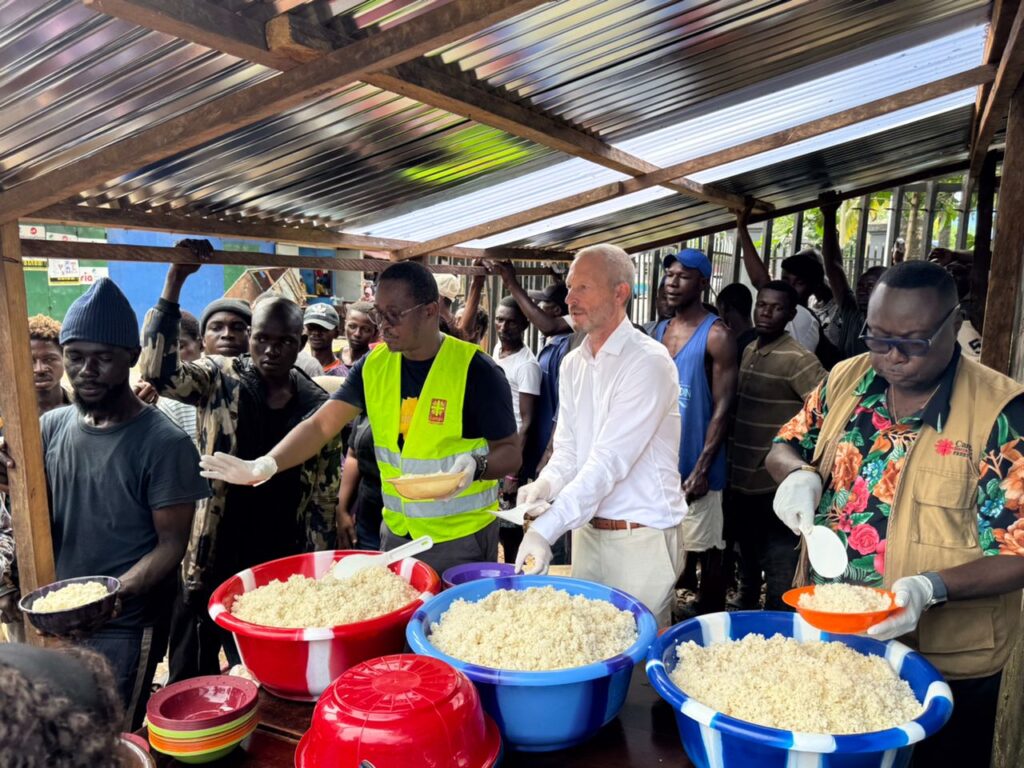
Freetown, Sierra Leone – September 26– Caritas Freetown, with generous support from the Maga Foundation, officially launched its inaugural Soup Kitchen today, aimed at providing nutritious meals to those in need within the western urban area. This initiative seeks to offer quality food to individuals regardless of their social status, ensuring that no one goes hungry. The Soup Kitchen’s first day was a resounding success, serving a total of 197 individuals with a hearty meal of rice and beans. The initiative is designed to cater to a diverse group of beneficiaries, including struggling businesspeople, elderly individuals facing starvation, visually impaired beggars, and schoolchildren in need of nourishment. In a unique twist, the meals served at the Soup Kitchen are prepared by trainees from Caritas’s Hospitality Project, which is also supported by the Maga Foundation in Spain. This project focuses on recruiting and training at-risk young women, providing them with essential skills and opportunities in the hospitality industry. The trainees will prepare meals for the Soup Kitchen once a week, creating a sustainable cycle of support and empowerment. Reverend Fr. Peter Konteh, Executive Director of Caritas Freetown, emphasized the importance of action in demonstrating love, stating, “Love is not just words but action. Caritas means love in action.” He expressed gratitude for the partnerships that make such initiatives possible. Among the volunteers was Gerald Hatler, who passionately served the meals to the hungry, embodying the spirit of compassion that the Soup Kitchen represents. The initiative aims to provide meals once a week, with the goal of feeding anyone who falls within the designated categories of need. Project Manager Isatu Sidibay expressed her pride and excitement at the turnout, noting the gratitude from beneficiaries who reported that the food was delicious. She extended her heartfelt thanks to the Maga Foundation for their generous support in making this initiative a reality. Caritas Freetown’s Soup Kitchen marks a significant step in addressing hunger in the community, and the organization looks forward to continuing this vital service to those in need. Fifty-six-year-old Aminata Kamara shared her heartfelt story of struggle and hope after benefiting from the newly launched Soup Kitchen initiative by Caritas Freetown. For some time, Aminata had faced significant challenges in finding food to eat, often feeling desperate and hungry. While wandering near the Youyi building, she was informed by some children about the soup kitchen serving meals for the hungry. This news felt like a ray of hope in her darkest moments, as she realized that help was available for those in need. Expressing her profound gratitude, Aminata thanked the donors and volunteers who made the soup kitchen possible. “Your kindness has made a difference in my life and the lives of many others who are struggling like I am,” she said, her voice filled with emotion. As she received her meal, she took a moment to pray for those who contributed to the initiative, wishing blessings upon them for their compassion and support. Aminata’s story highlights the critical impact of community support and the importance of initiatives like the Soup Kitchen in addressing hunger and food insecurity in Freetown. Breakdown of Beneficiaries197 beneficiaries (Men 72, Women 50, Boys 35, Girls 40)
Peace Message from Caritas Freetown on International Day of Peace

On this International Day of Peace, September 21, Caritas Freetown reaffirms its commitment to fostering a world where the voices of the marginalized and vulnerable are not only heard but acted upon. We envision a society where every individual has the opportunity to thrive, living in peace and dignity, free from fear and oppression. As stewards of our environment, we recognize the sacred duty to manage our natural resources responsibly and sustainably, ensuring that the well-being of our planet is safeguarded for future generations. Together, let us build bridges of understanding, compassion, and solidarity, uniting in our shared humanity. May this day inspire us all to work towards a more just and peaceful world, where every person can flourish and contribute to the common good. Let us embrace peace not just as a concept, but as a lived reality for all. In solidarity and hope, Caritas Freetown
Tzu Chi Foundation Concludes Annual Rice Distribution to Ebola Survivors in Freetown
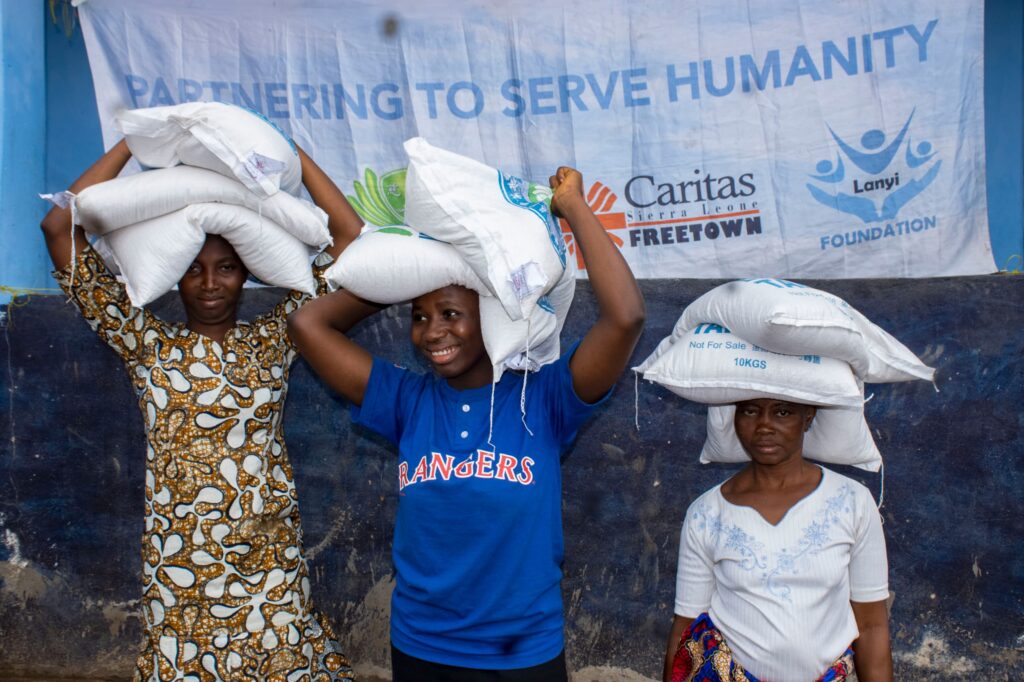
Tzu Chi Foundation concluded its annual rice distribution to Ebola survivors and their families in Freetown. The distribution, which began in Goderich and ended in the Rokel community, Western Area Rural, marks the ninth consecutive year of the foundation’s efforts to address the needs of Ebola survivors in Sierra Leone. This mission has been made possible through partnerships with the Healey International Relief Foundation, Caritas Freetown, and the Lanyi Foundation. Margret Bassie, Tzu Chi’s representative in Sierra Leone, expressed her appreciation to the teams and volunteers who contributed in various ways to ensure the smooth execution of the distribution. She emphasized Tzu Chi’s core values, including charity, medical aid, education, and humanistic culture, all driven by a commitment to compassion and altruism. Bassie noted that those unable to collect their rice during the distribution can do so on Monday at the Partnering to Serve Humanity Headquarters at St. Edward’s Senior Secondary School in Kingtom. Mary Kamara, an Ebola survivor, expressed her sincere gratitude to the Tzu Chi Foundation and its partners for supplying her family rice during the rainy season. She shared that the distribution brought immense joy to her life, as she had gone to bed the previous night with an empty stomach due to a lack of food. Kamara, who has been a recipient of the rice distribution for nine years, expressed hope that Tzu Chi and its partners would continue their support. Ibrahim Sonny Sesay, another Ebola survivor residing in the Waterloo community, also expressed his gratitude. A single father who lost his wife and two children during the Ebola epidemic, Sesay said, “I am happy to receive this rice. My children and I can now eat comfortably for some time.” He added that he hopes Tzu Chi’s support will continue. At the end of the event, the Ebola survivor community presented a gift to Margaret Bassie in appreciation of her advocacy on their behalf. Bassie expressed her gratitude and reaffirmed her hope that the relationship between Tzu Chi and the Ebola survivors will continue. As Tzu Chi concludes its annual rice distribution, its continued support has been a beacon of hope for many Ebola survivors in Sierra Leone, providing relief and sustenance to families affected by the devastating epidemic. The foundation’s commitment to humanitarian efforts remains unwavering, and its partnership with local organizations strengthens its ability to make a lasting impact.
Agiamondo and Caritas Freetown Hold Media Law and Ethics Training for Staff
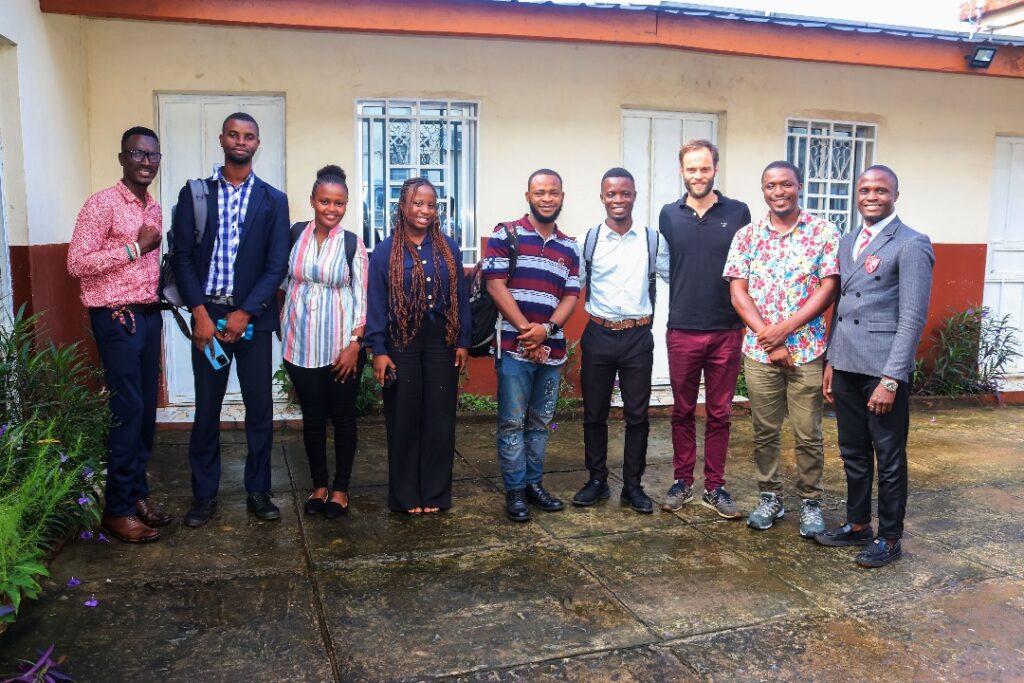
On September 10, 2024, Agiamondo, in collaboration with Caritas Freetown, conducted a one-day capacity-building session on Media Law and Ethics at the Agiamondo conference room in Kingtom, Freetown. The training aimed to strengthen the knowledge of Caritas Freetown’s media staff and the Sick Pikin Project volunteers on ethical journalism, fact-checking, and the legal framework governing media operations in Sierra Leone. Facilitated by Mr. Sheku P. Kamara, the session began with a warm welcome to participants, followed by an invitation to actively engage throughout the training. Mr. Kamara also administered a pre-test survey on media law and ethics, based on feedback previously gathered via email. He described Media Law and Ethics as a critical framework for ensuring that media professionals ethically handle information, particularly when using content from the public. Emphasizing the importance of transparency and accountability in journalism, he highlighted these principles as essential to the work of Caritas Freetown in the humanitarian sector. A significant portion of the training was dedicated to discussing the legal limitations on freedom of expression as outlined in the 1991 Constitution of Sierra Leone. Mr. Kamara explained Section 25(1), which guarantees citizens’ right to free expression, and Section 25(2), which places restrictions on that right in accordance with the Independent Media Commission (IMC) Code of Practice. Additionally, the session covered the Sierra Leone Association of Journalists’ Code of Conduct, shedding light on topics such as copyright, reporting on children, handling stories under grief and shock among others, all of which are relevant to Caritas Freetown’s operations. Fact-checking was another key focus of the training, with Mr. Kamara stressing its importance in maintaining journalistic integrity. He outlined both internal and external fact-checking methods and urged participants to ensure the accuracy and reliability of their reporting. By practicing thorough fact-checking, media professionals can not only safeguard the credibility of their work but also protect the reputations of the organizations they represent. The training also addressed ethical issues such as anonymity and source confidentiality, which are crucial in investigative journalism. Protecting the identity of sources is essential, particularly when revealing sensitive information that may pose risks to individuals. The event concluded with recommendations for the participants to maintain ethical standards while balancing accuracy and transparency in the dispensation of their duties. The session saw active participation from representatives of the Caritas Media and the Sick Pikin Project. This training provided participants with valuable insights into their legal and ethical responsibilities as media practitioners, equipping them with the tools necessary to navigate the complex field of media law and ethics in Sierra Leone.
Building a Safer Future: Men and Boys Leading the Way!

Today, September 9, 2024, Caritas Freetown hosted a community awareness session on Gender-Based Violence (GBV), focusing on policy landscapes and the vital involvement of men and boys. This impactful event gathered 50 participants from the Lumpa, Russel, Hastings, Regent, and Old Wharf communities at the Western Area Rural District Council (WARD C) Hall in Waterloo. As part of our project, “Strengthening Community Resilience & Protecting Women and Girls through Integrated Disaster Preparedness (Goal 4) and Violence Mitigation (Goal 3),” funded by Trocaire, we aim to spark meaningful change by actively involving men and boys in preventing gender-based violence (GBV) while promoting women’s empowerment and gender equality. Today’s session covered key topics, including the societal roles of men, boys, women, and girls, the concept of masculinity and the “MAN BOX,” as well as the legal frameworks in place to combat GBV in Sierra Leone. Our objectives were to deepen understanding of women’s and children’s rights, highlight the effects of violence, and equip participants with strategies to manage emotions such as helplessness, stress, anger, and fear. Facilitated by an expert from the Ministry of Gender and Children’s Affairs alongside our dedicated Caritas Freetown team, the event was a resounding success! We witnessed vibrant discussions and a collective commitment to building a safer and more equitable community. Engaging men and boys in redefining gender relations is crucial for sustainable change. By fostering a sense of responsibility, we emphasize that “gender equality benefits everyone”. Together, let’s empower our communities, uplift women and girls, and cultivate a culture of respect and equality. Together, we can create safer spaces for all! GBVprevention #WomenEmpowerment #GenderEquality #ViolenceMitigation #SierraLeone #Trocaire #CaritasFreetown
Strengthening Community Resilience & Women and Girls Protection Through Integrated Disaster Preparedness (Goal 4) and Violence Mitigation (Goal 3) in the Western Area of Sierra Leone
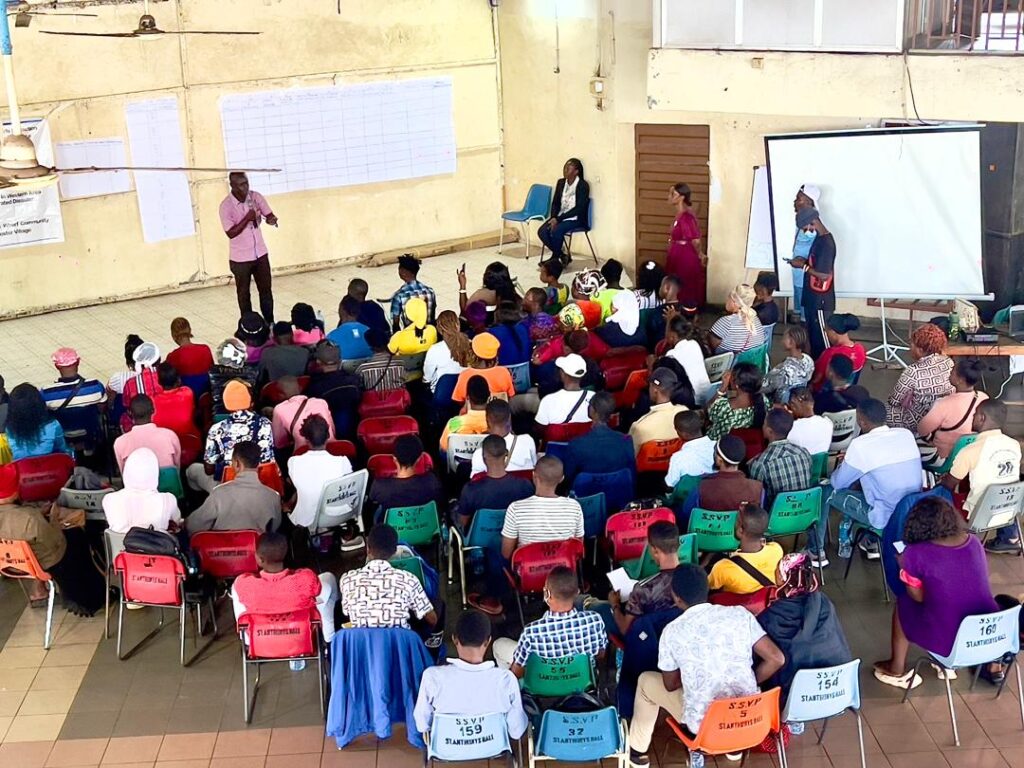
Name of activity: Disaster Preparedness Emergency Planning TrainingDate: 16th July, 2024Time: 10:00 amVenue: St. Anthony’s Parish Hall, Syke Street, FreetownDuration of activity: (5 hours) Caritas Freetown, with funding from Trocair, organized Stakeholders Disaster Preparedness Emergency Planning Training on the Project Title: “Strengthening Community Resilience & Women and Girls Protection Through Integrated Disaster Preparedness (Goal 4) and Violence Mitigation (Goal 3) in the Western Area of Sierra Leone”The training particularly looked at goal 4 which is the Integrated Disaster preparedness and mitigation in the Western Area and it aimed at training and preparing stakeholders from five various communities about disaster preparedness and Emergency planning. The various communities targeted where Portee Community, Wellington Old Whaf Community, Lakka Community, Number 2 River Community and Gloucester Community. There were two facilitators ; Mr. Mohammed Sahid Conteh, CDMC Sierra Leone National Administrative Secretary General from Community Disaster Management Committee (CDMC) and Mr. Idriss Gibson Mansaray from Caritas Freetown. They were able conclude presentation on the following Topics : Problem Tree on Disaster Risk Response (DDR), what is an Action Plan?, Brainstorming/ Analysis, Transforming PT, Plan (CMI) Types of Volunteer in Development,Basic Disaster Risk Reduction Terminologies, Transact work and Analysis, Community Hazard/Risk Assessment, Community hazard/Risk Map Drawing. During the training, participants were placed in various groups and make them gathered around a flip chart distributed to each group for some group work and exercises, after which a presentation was done by each group making the sessions lively and interactive.
Catholic Relief Services (CRS) Feedback Complaint and Response Mechanism (FCRM) Department, conducted a two-day popularization session in partnership with Caritas Freetown’s staff in the Youth in Politics and Peace Building Project
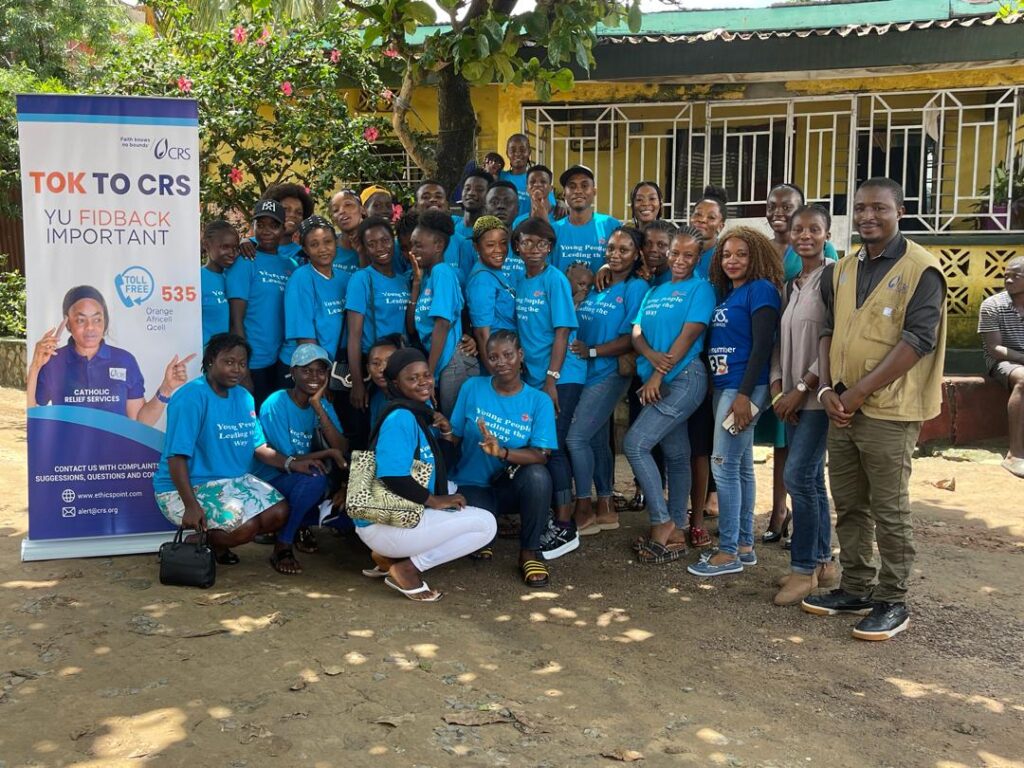
On the 23rd and 24th July, 2024, Ms Kharty and Ms Gabriella who are Technical staff from the Catholic Relief Services (CRS) Feedback Complaint and Response Mechanism (FCRM) Department, conducted a two-day popularization session in partnership with Caritas Freetown’s staff in the Youth in Politics and Peace Building Project. Four (4) project communities; 2 in the Western Rural and another 2 in the Western Urban Area Districts. The purpose of the popularisation of the FCRM was to ensure that the FCRM short code, 535, which is available on all Mobile Networks, would be widely promoted and utilized by the project participants and partners. The initiative aimed to enhance the overall quality of Caritas Freetown’s projects and also address the concerns and feedback from project participants on a timely and effective manner. The session targeted a total of four communities: Lakka and Kossoh Town in the Western Area Rural , as well as Brookfields and Kissy Communities in the Western Area Urban. The session in each of the communities were attended by 40 participants, reaching out to a total of 125 (22 male 101 of female) in attendance, including Persons With Disabilities (2 PWDs), who were educated on the purpose and use of the FCRM shortcode. The Safeguarding session, facilitated by CRS ‘s Technical Staff, Ms. Kharty and Gabriella provided an invaluable opportunity to empower the project participants and stakeholders with knowledge about and importance of setting up the FCRM system. Such initiative is meant to improve project quality and address project participants’ concerns or complaints more effectively; ultimately leading to a highly positive impact on the communities/groups that we serve. The FCRM short code, 535, is a critical tool for our project participants and partners to directly provide feedbacks, concerns, or complaints directly to the CRS data portal. Lastly, it was stated the the transparent and accessible mechanism will ensure that the voices of the project participants or community members are heard and addressed on time, strengthening accountability and moreover, prompt response to complaints be it sensitive or non-sensitive. On the whole, the popularisation of the FCRM in those communities was successful.
Fr. Peter Konteh Advocates for Action Against Rising Drug Addiction Among Youth on Caritas Sunday
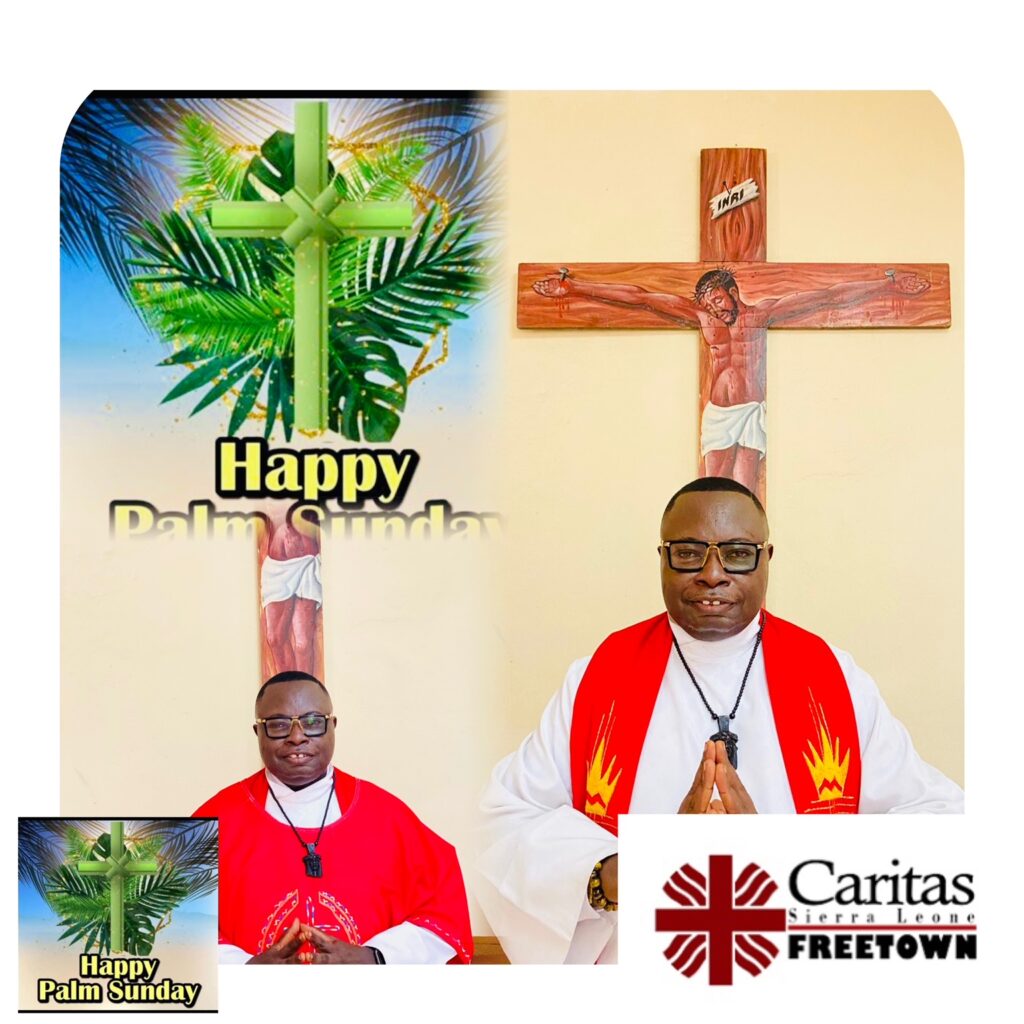
Serious Times Call for Serious Measures: Sierra Leoneans Urged to Unite in Face of Kush Crisis”No Laughing Matter:Putting Politics Aside: Sierra Leone Urged to Address Kush Crisis with Unity and Resolve” Fr. Peter Konteh Advocates for Action Against Rising Drug Addiction Among Youth on Caritas Sunday In a poignant address marking Caritas Sunday, Fr. Peter Konteh, the esteemed Executive Director of Caritas Freetown, delivered a heartfelt message calling for urgent action to address the alarming surge of drug addiction among the youth in our community. Against the backdrop of escalating concerns over the prevalence of dangerous substances like Kush, Fr. Konteh emphasized the critical need for collective efforts to combat this pressing issue and provide vital support to those affected. Speaking with compassion and unwavering commitment, Fr. Konteh underscored the gravity of the situation, acknowledging the unfortunate reality of many young individuals falling prey to the vicious cycle of addiction due to a myriad of underlying factors. He stressed the importance of approaching the issue with empathy and understanding, steering the narrative away from judgment towards a narrative of support and empowerment for those struggling with substance abuse. “As we gather on this solemn occasion of Caritas Sunday, we must confront the harsh realities faced by our youth, many of whom have become ensnared in the grip of addiction,” remarked Fr. Konteh. “We must stand together as a community, extending a hand of compassion and solidarity to those in need, and working tirelessly to address the root causes that perpetuate the cycle of substance abuse.” Fr. Konteh highlighted the multifaceted challenges driving the surge of drug addiction among the youth, including socioeconomic disparities, peer pressure, trauma, and stress. High levels of poverty, limited opportunities for advancement, and the influence of peer groups can push vulnerable youth towards seeking solace in dangerous substances as a coping mechanism, perpetuating a cycle of dependency that hampers their well-being and potential for a bright future. Moreover, the trauma inflicted by conflicts, violence, and adverse experiences further compounds the vulnerability of young individuals, making them susceptible to the allure of drugs as a temporary escape from their harsh realities. Fr. Konteh urged for a comprehensive approach that delves into the root causes of addiction, including addressing the supply chain that facilitates the proliferation of harmful substances within our communities. “In the spirit of Caritas, let us embrace a culture of compassion, resilience, and empowerment as we stand in solidarity with those affected by addiction,” Fr. Konteh passionately urged. “Together, we can forge a path towards recovery, healing, and a renewed sense of hope for our youth, guiding them towards a brighter, drug-free future.” As the community marks Caritas Sunday, Fr. Peter Konteh’s message serves as a poignant call to action, reminding us of our shared responsibility to protect and nurture the well-being of our youth, and to create a society founded on principles of compassion, support, and unity in the face of adversity. Through collaborative efforts and unwavering dedication, we can pave the way for a healthier, more resilient community where every individual has the opportunity to thrive and fulfil their potential.