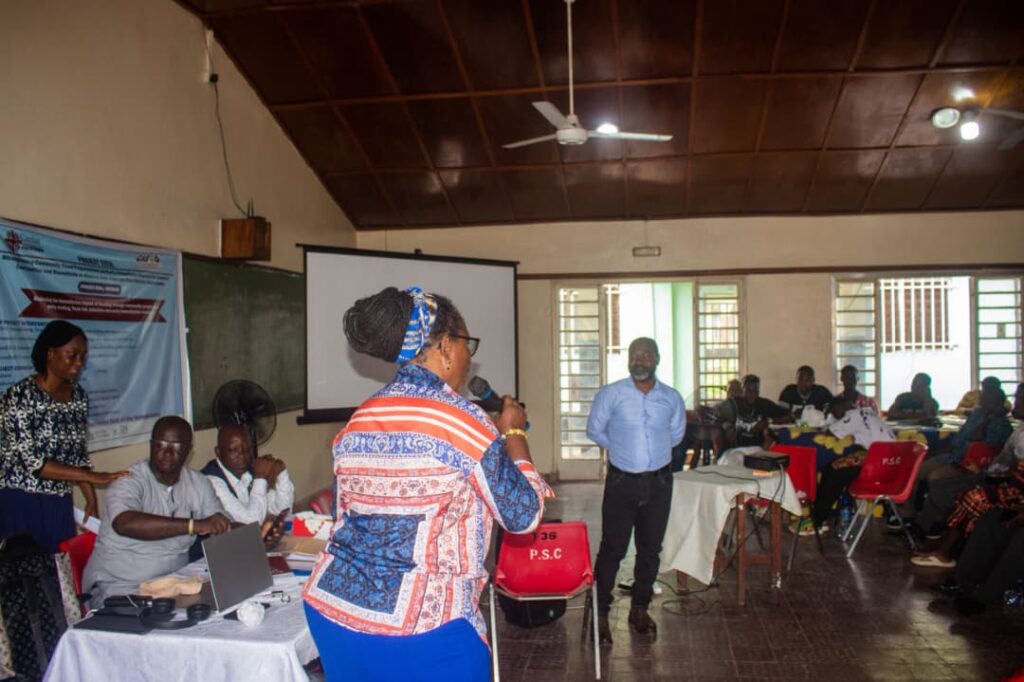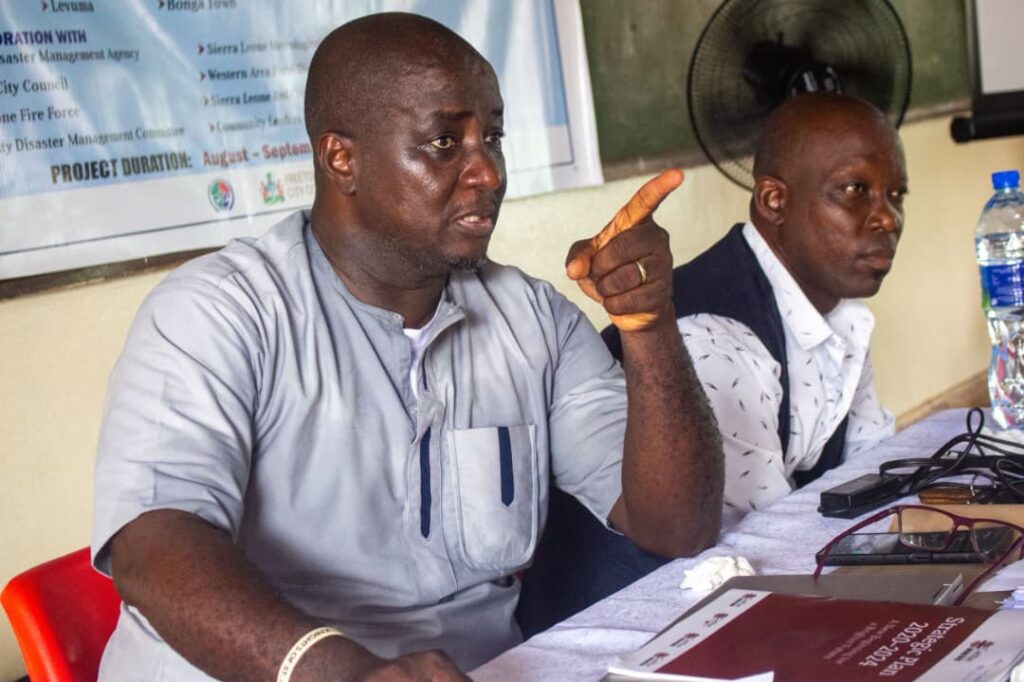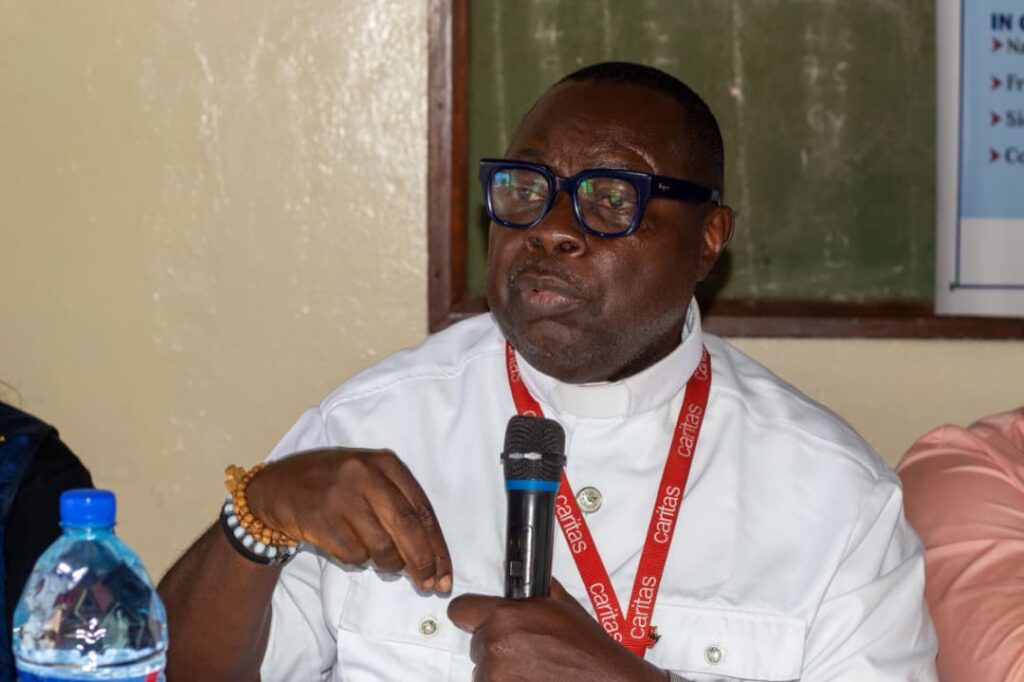
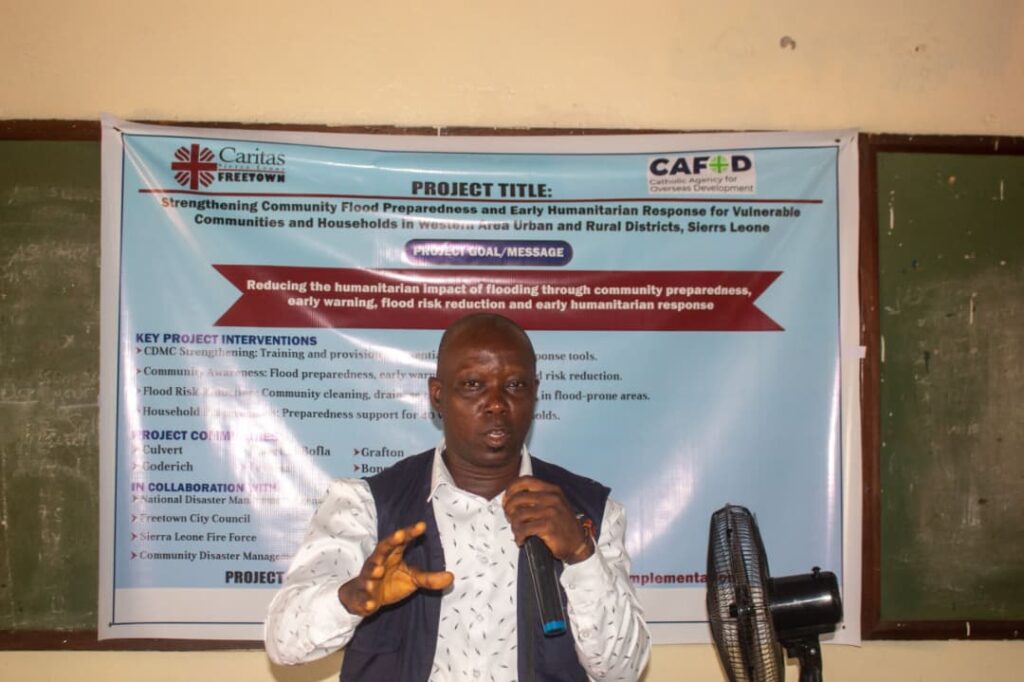
Caritas Freetown successfully launched the 45-day flood preparedness and early humanitarian response project, “Strengthening Community Flood Preparedness and Early Humanitarian Response for Vulnerable Communities and Households in Western Area Urban and Rural Districts, Sierra Leone,” on 8 September 2026 in Kingtom Edwards Compound Hall. The launch brought together representatives from key government institutions, humanitarian partners, community disaster management structures, Caritas Freetown leadership, and other relevant stakeholders.
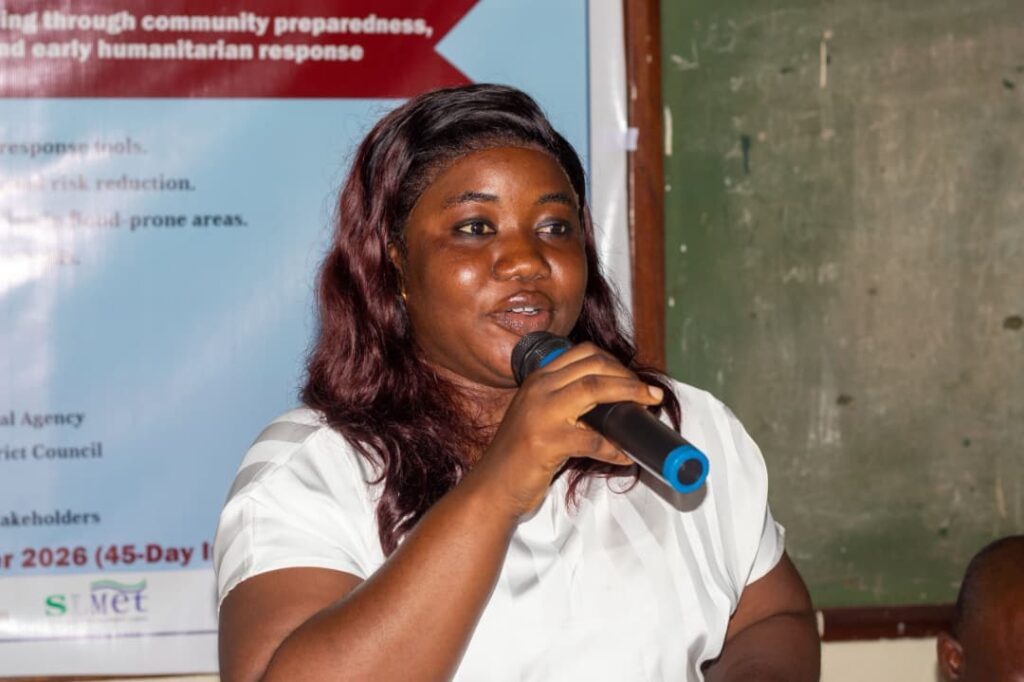
All invited guests and stakeholder representatives from the Freetown City Council (FCC), National Disaster Management Agency (NDMA), Sierra Leone Meteorological Agency (SLMet), National Fire Force, Sierra Leone Red Cross Society, Caritas National, Western Rural District Council and CAFOD were in attendance and delivered statements in support of the project. Their contributions highlighted the importance of strengthening community preparedness, improving coordination, promoting early action, reducing flood risks, and strengthening collaboration between communities, government institutions, and humanitarian actors.
The project was officially launched jointly by the Director General of the National Disaster Management Agency, Mr. Vandi Rogers; the Executive Director of Caritas Freetown, Rev. Fr. Peter Konteh; and the CAFOD Country Representative, Mr. Mitchel Mondengele. Their participation demonstrated strong institutional and partner commitment to the successful implementation of the intervention.
During the launch, Caritas Freetown presented an overview of the project, including its objectives, target communities, key interventions including the community preparedness targeting, household preparedness targeting for 40 households through in-kind support, and clearing of main drainages leading to informal settlements, implementation approach, and expected results. The launch also marked the official commencement of the 45-day project implementation period, following which the two-day capacity-building training for 80 CDMC members commenced.
Two-Day CDMC Capacity-Building Training
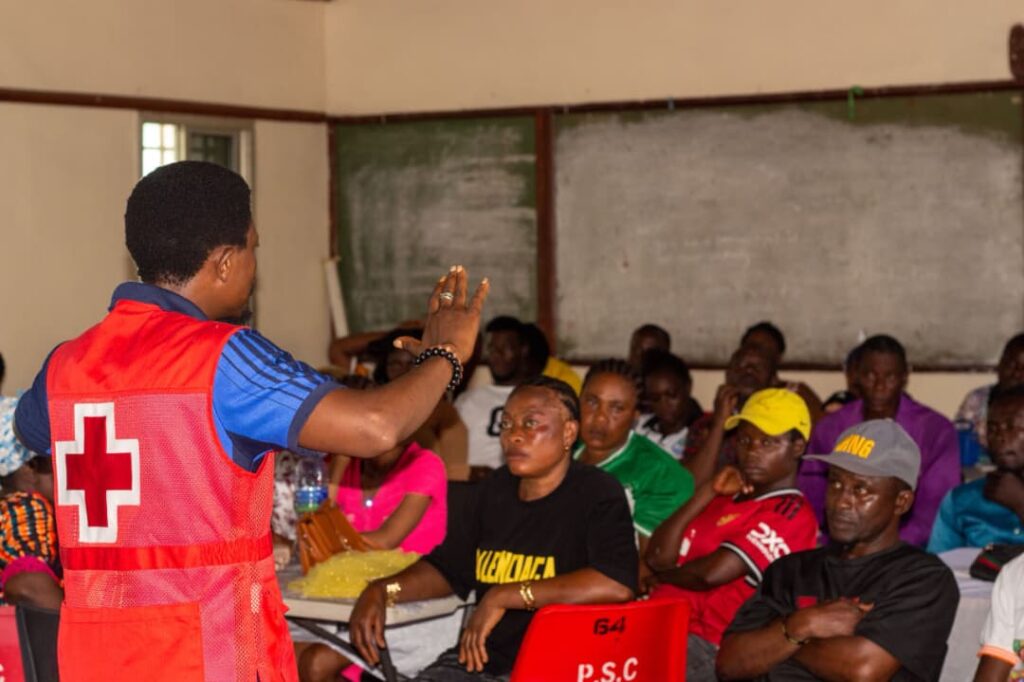
Following the official project launch, Caritas Freetown immediately conducted a two-day capacity-building training for 80 Community Disaster Management Committee (CDMC) members representing the eight targeted vulnerable communities (Waterloo Bofla, Portee, Grafton, Culvert, Gary Bush, Banga Ground, Goderich, and Levuma Community)
The training aimed to strengthen the knowledge and practical skills of CDMC members in disaster risk reduction, flood preparedness, anticipatory action, early warning, fire prevention, emergency response, environmental sanitation, flood mitigation, first aid and safeguarding.
Day One: Disaster Preparedness, Risk Reduction and Emergency Response
The first day (8th September) focused on fundamental disaster risk management concepts, including hazards, risks, vulnerability, capacity, mitigation and preparedness. Participants were also introduced to practical approaches for reducing disaster risks within their communities.
Ms. Philomena Turay of the National Disaster Management Agency facilitated the sessions on disaster risk management and community preparedness. Participants explored how hazards can become disasters when they affect vulnerable populations with limited capacity to prepare and respond.
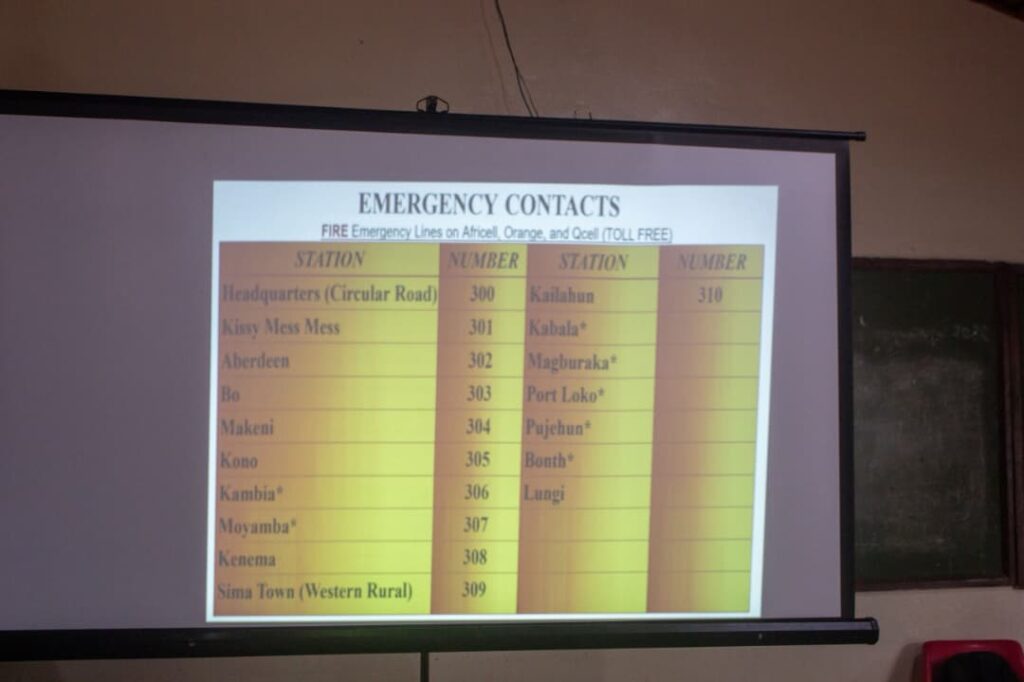
Dr. Kamara of the National Fire Force facilitated the sessions on fire prevention, fire safety, emergency response and flood mitigation. Participants learned about the fire triangle, fire prevention measures, and appropriate use of fire extinguishers, evacuation procedures and actions to take during fire emergencies.
A practical Problem Tree Analysis exercise was also conducted by the National Chairman of the Community Disaster Management Committee Mr. Bob Jones, allowing participants to work in groups to identify key disaster-related problems, underlying causes and consequences affecting their respective communities. The exercise promoted teamwork and encouraged participants to think critically about locally appropriate prevention and mitigation measures.
Day Two: Early Warning, Environmental Sanitation, First Aid and Safeguarding
The second day (9th September) focused on weather forecasting, early warning information, anticipatory action, environmental sanitation, waste management, flood mitigation, first aid and safeguarding.
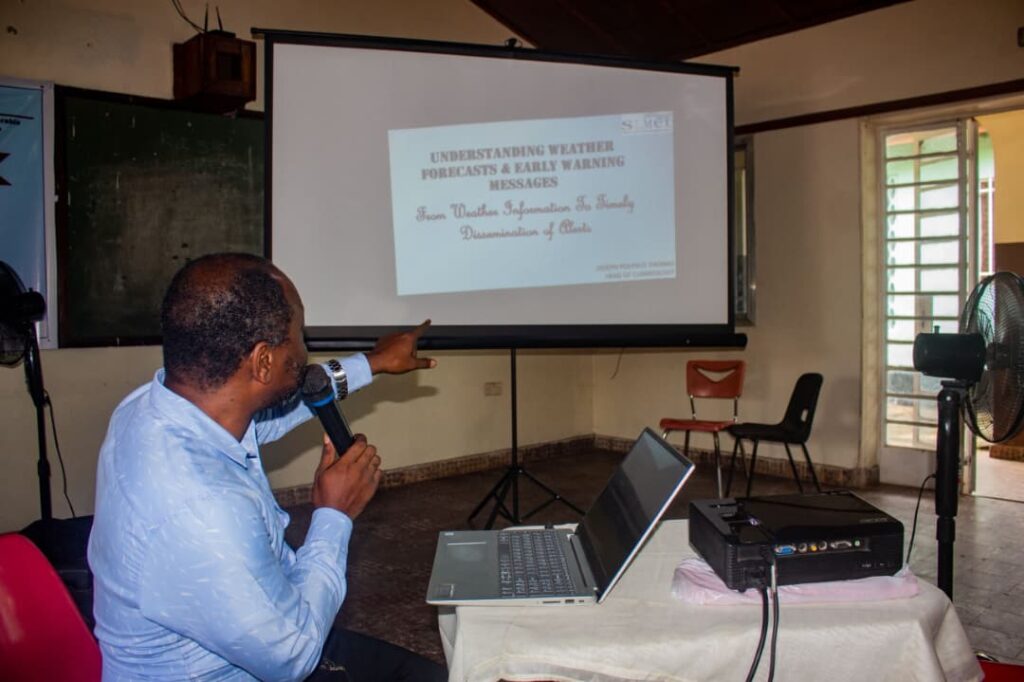
Mr. Polynaus of the Sierra Leone Meteorological Agency provided participants with an understanding of weather forecasting and the importance of timely and reliable weather information in supporting early action. Participants discussed rainfall, thunderstorms, wind conditions, weather forecasts and the importance of monitoring official information, particularly during periods of severe weather.
Freetown City Council representatives Mr. Abass Kamara and Mr. Hallowell facilitated a session on solid waste management, sanitation and flood mitigation. The discussion highlighted the relationship between poor waste disposal, blocked drainage systems and flooding. Participants also identified specific environmental and infrastructure challenges affecting their communities, including blocked drains, inadequate waste disposal locations, inaccessible areas and structures that may pose disaster risks.
Mr. Paul Kargbo of the Sierra Leone Red Cross Society facilitated a practical session on first aid, covering immediate assistance to injured or ill persons, preservation of life, prevention of further harm, promotion of recovery and psychological first aid.
The training concluded with a safeguarding session from the Caritas Freetown Safeguarding Focal Person Mrs. Grace Jones, which emphasized the protection of children, vulnerable adults, persons with disabilities and other individuals who may be exposed to abuse, exploitation, discrimination or neglect. Participants were introduced to safeguarding principles, prohibited behaviors and available reporting channels.
The launch and two-day CDMC capacity-building training achieved several important results for the project. The project was officially launched by the Director General of the National Disaster Management Agency (NDMA), with strong participation from government institutions, partner organisations, Caritas representatives, and community structures. A total of 80 CDMC members from the eight target communities successfully completed the two-day training, strengthening their understanding of disaster risks, vulnerability, capacity, mitigation, and preparedness.
Participants also gained practical knowledge on early warning, weather information, anticipatory action, fire prevention, emergency response, and evacuation preparedness. Through the practical discussions and group exercises, community representatives were able to identify key challenges affecting their communities, particularly those related to waste management, poor drainage, flooding, and other disaster risks.
The community Leaders and CDMC member of the 8 communities pledged their commitment and support for the successful implementation of the project in strengthening their preparedness mechanisms.
Overall, the training strengthened collaboration and linkages between the CDMCs, Caritas Freetown, NDMA, FCC, SLMet, the Sierra Leone Red Cross Society, the National Fire Force, and other stakeholders. Participants were also encouraged to cascade the knowledge and skills gained to other community members and support practical preparedness and risk-reduction actions within their communities.
Caritas Freetown will work closely with the trained CDMC members and relevant stakeholders to translate the knowledge gained into practical preparedness, early warning, flood risk reduction and community resilience actions.