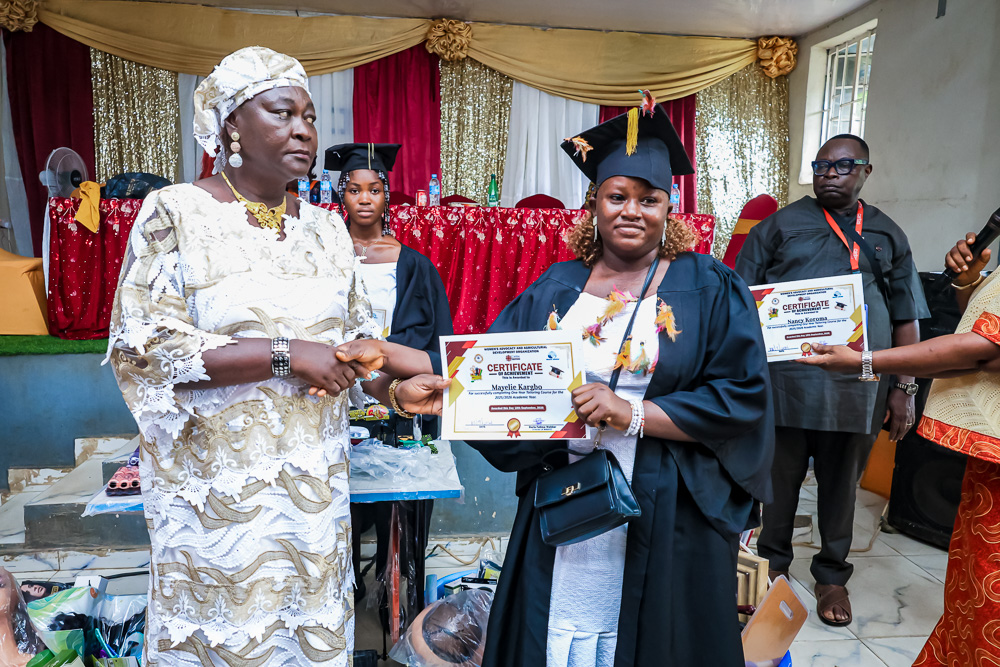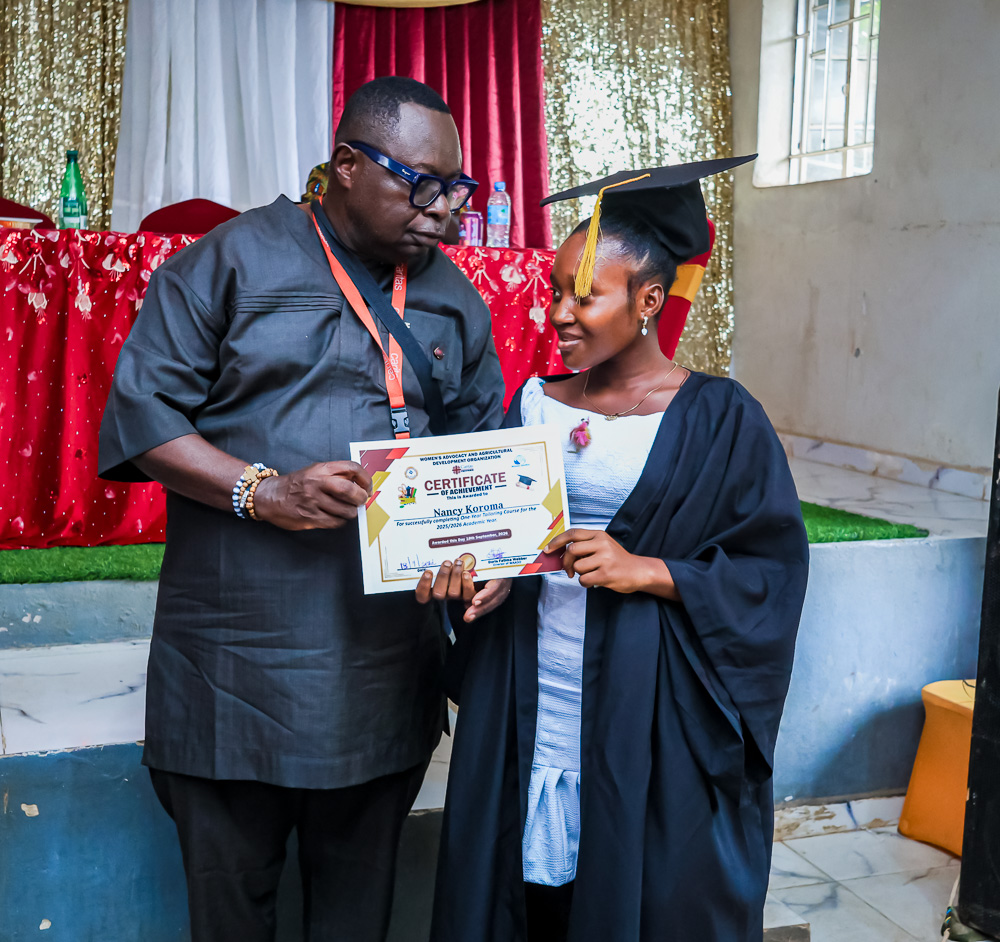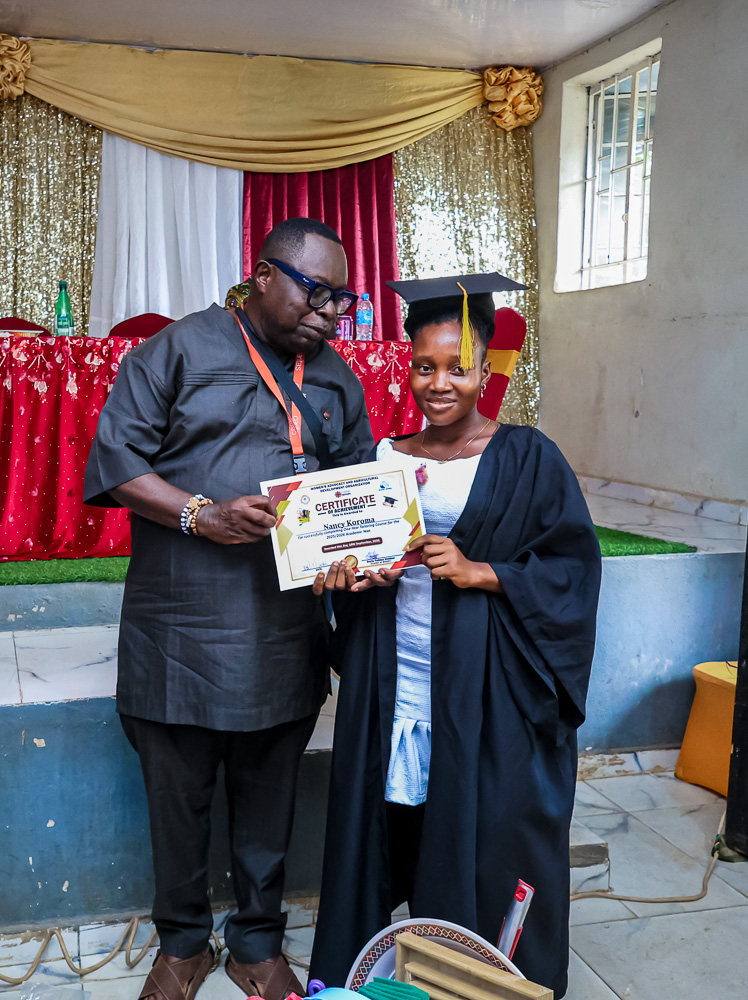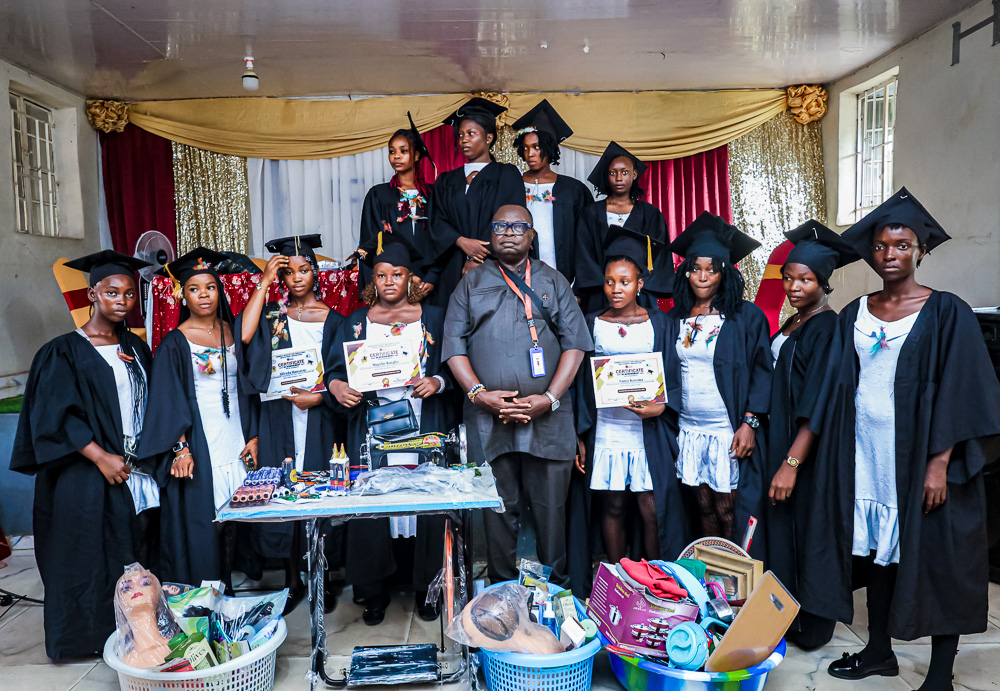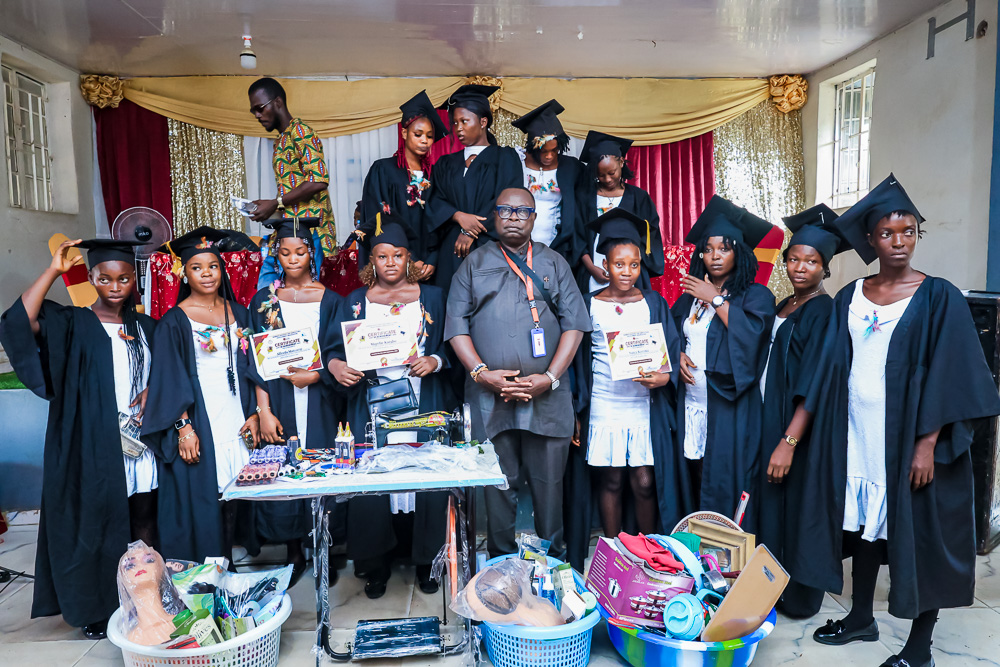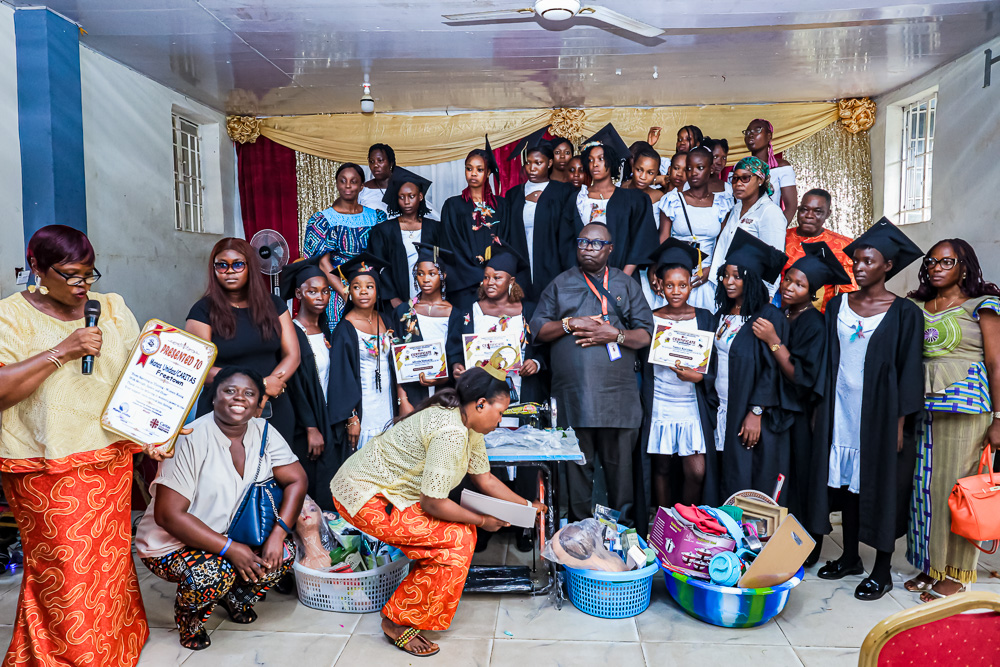
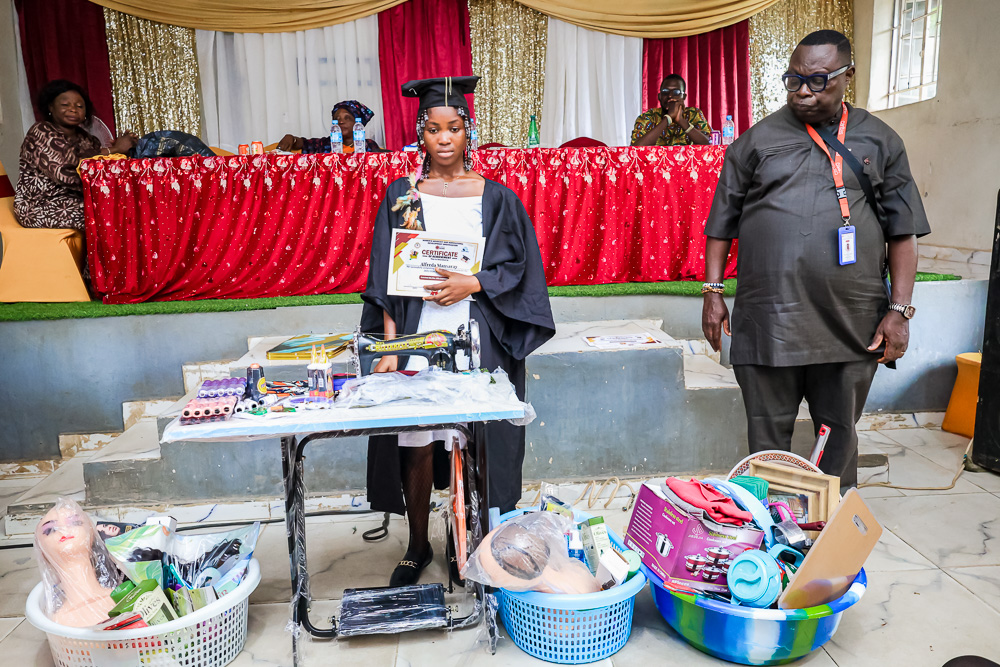
On Friday, 18th September 2026, twenty survivors of Sexual and Gender-Based Violence (SGBV) graduated from a vocational skills training program and received start-up kits to help them build sustainable livelihoods and contribute to societal growth.
The program was implemented by Caritas Freetown in partnership with the Women’s Advocacy and Agricultural Development Organization (WAADO) with funding from Manos Unidas.
The graduation ceremony was held at the Frandy Hall, Waterloo, in the Western Rural District bringing together graduates, families, community leaders, the Executive Director and other staff od Caritas Freetown, representatives of the Family Support Unit (FSU), the Ministry of Gender and Children’s Affairs and the Ministry of Social Welfare.
The training which was carried out under a project titled “Strengthening Behaviour Change on SGBV Prevention, Promoting Access to Justice and Wellbeing for Vulnerable Women and Girls in Western Area,” is being implemented in 10 communities across the Western Area Rural District, working with schools, the Family Support Unit (FSU) of the Sierra Leone Police, community leaders and other stakeholders.
Giving an overview of the project, Project Manager, Kumba Gando said the project focuses on preventing SGBV, strengthening community and institutional responses, and improving access to justice and support services for vulnerable women and girls.
She explained that the project has three main objectives. These include strengthening schools and communities to prevent SGBV through awareness raising and positive behaviour change; strengthening institutions such as the FSU, community leaders and community-based organisations to respond more effectively to SGBV cases; and improving access to justice and support services for vulnerable survivors.
As part of the intervention, 20
SGBV survivors received vocational training in tailoring, catering and hairdressing. The beneficiaries also received transportation support throughout the training period.
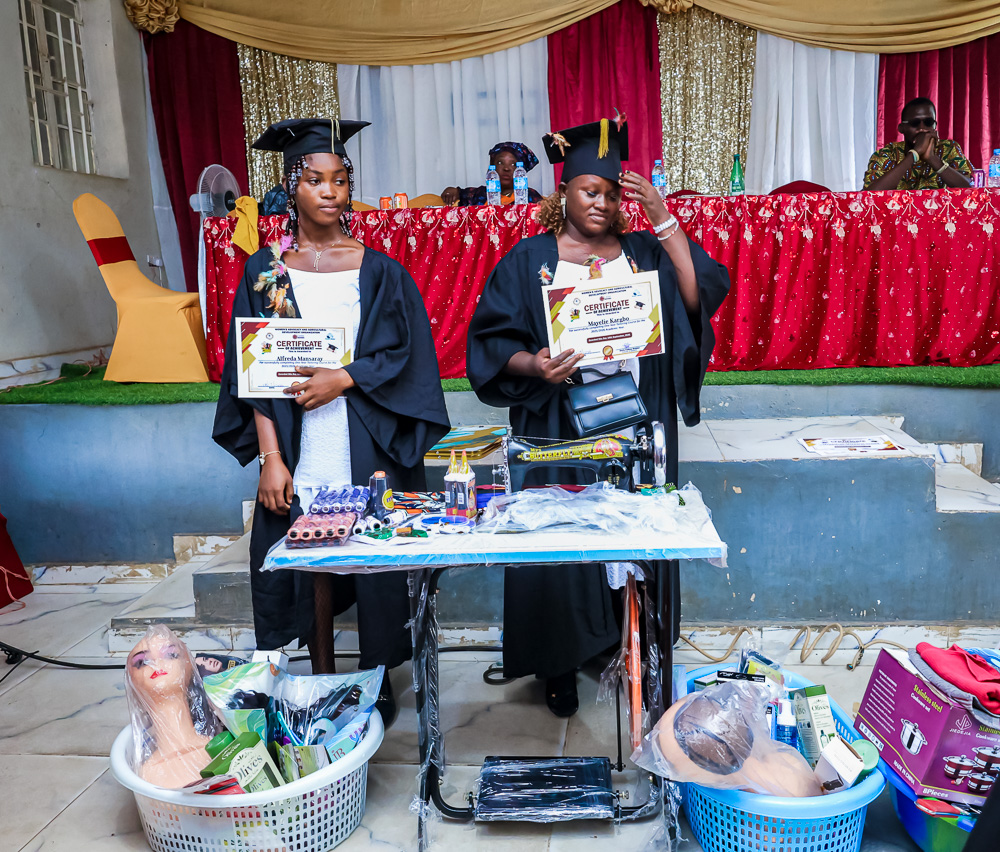
Following the completion of their training, each graduate received a start-up kit to help them put their newly acquired skills into practice, establish businesses and work towards earning a sustainable income.
Speaking at the ceremony, FSU Western Rural District Line Manager, Yeanor Christiana Mansaray said violence against women and children remains a concern reflected in cases handled by the Family Support Unit. She assured the beneficiaries and other stakeholders of the FSU’s continued support in responding to SGBV cases.
She also acknowledged Caritas Freetown’s support to the FSU in its efforts to protect women and children and strengthen the response to SGBV, including support towards the prosecution of cases.
The Executive Director of Caritas Freetown, Rev. Fr. Peter A. Konteh, described Caritas as “love in action” and said the organisation’s work is focused on bringing hope into the lives of vulnerable people.
Fr. Konteh congratulated the graduates for their resilience and encouraged them to use the opportunity provided through the training to move forward. He told the graduates not to allow their past experiences to define their future.
“When we empower a girl, we strengthen a family, transform a community and build a better nation,” Fr. Konteh said.
The Director of the WAADO Skills Training Center, Doris Fatima Webber thanked Caritas Freetown, Manos Unidas and other partners for their support to the program.
She said the partnership with Caritas Freetown had benefited not only the trainees but had also helped strengthen the capacity of WAADO as an organisation. She called for continued support and collaboration to enable the centre to expand its work. She encouraged parents and guardians to value their children and continue supporting them at home.
The WAADO Director also assured the graduates that their relationship with the centre would not end with the graduation. She said WAADO would continue to monitor, support and provide opportunities for further skills development.
The ceremony ended with the presentation of certificates and start-up kits to all 20 graduates. The graduates also exhibited some of the work they produced during their training, including fashion clothes, beadwork and other items, while products and practical work from the catering and hairdressing training were also showcased.
The support provided through the project is expected to help the graduates turn their skills into sources of income and take steps towards greater economic independence.
For the twenty graduates, the ceremony marks the completion of their training and the beginning of a new chapter, with skills, tools and renewed hope to build better lives for themselves and their families.