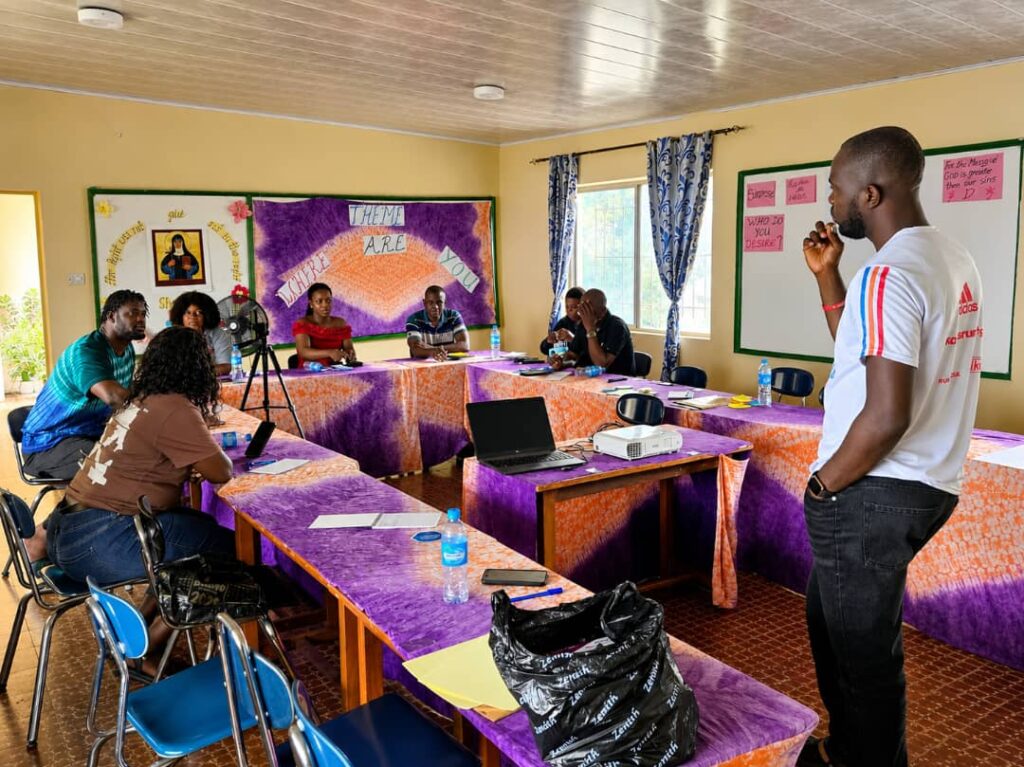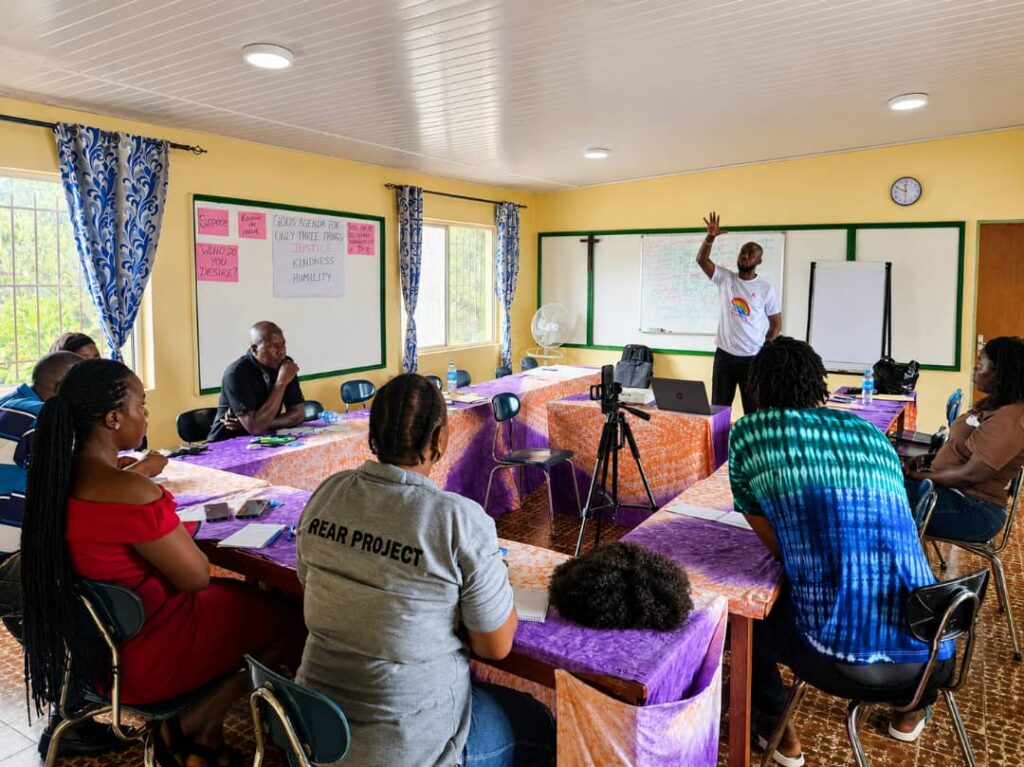
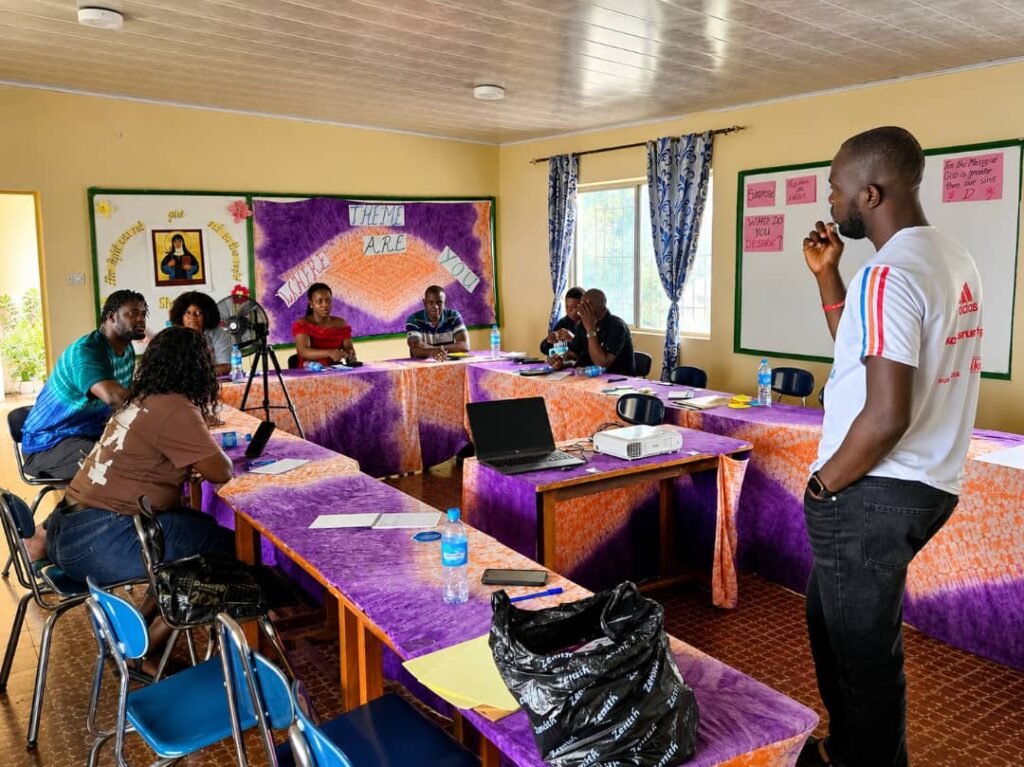
Caritas Freetown’s Emergency Response for Young People Affected by Kush Drug and Other Harmful Substances in the Western Area (REAR Project) has commenced a three-day staff retreat aimed at reviewing the project’s implementation, assessing its achievements and challenges, and strengthening the capacity of staff ahead of the next phase of the rehabilitation programme.
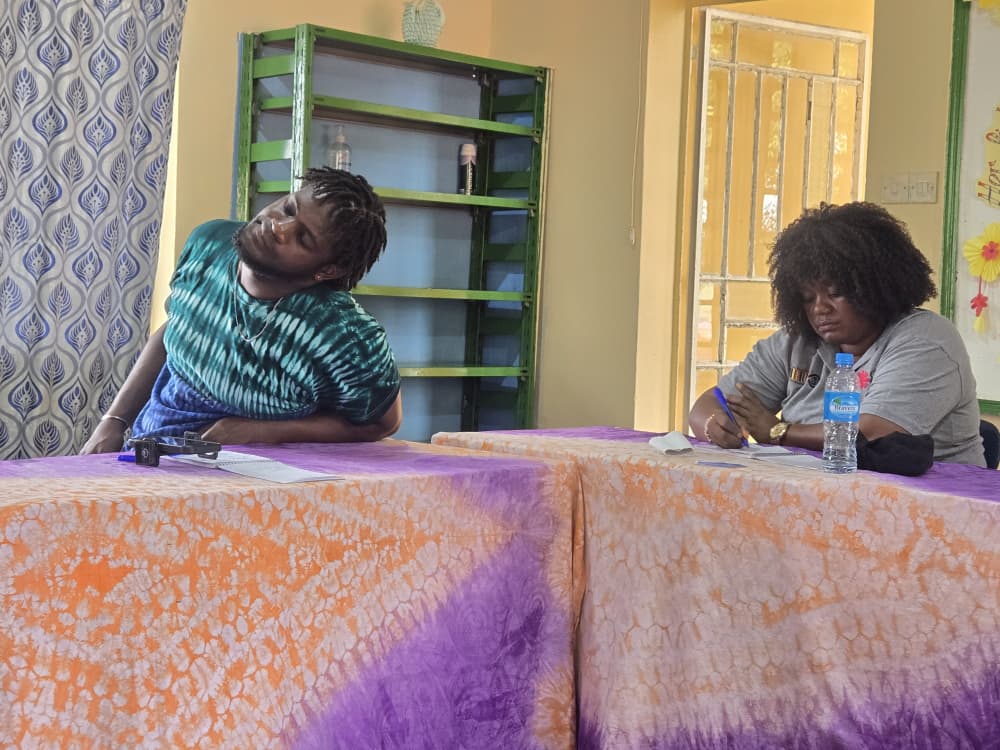
The retreat, which began on Thursday, 30th July 2026 and will conclude on Saturday, 1st August 2026, is being held at the Sisters of St. Joseph of Cluny, Javouhey House, Leicester. It provides an opportunity for project staff to reflect on the project’s interventions, identify lessons learned, and participate in a refresher training on safeguarding.
Speaking during the retreat, REAR Project Manager, Murray Massaquoi, described the gathering as an important opportunity for the team to evaluate the project’s progress while preparing for the admission of a new group of beneficiaries into the rehabilitation centre.
“This retreat allows us to reflect on our interventions, review what has worked well, identify the challenges we have encountered, and plan effectively for the next phase of the project,” he said. “Although our mission is to support survivors, we must also ensure that we, as service providers, are adequately prepared to meet their needs. The knowledge and experience we gain during this retreat will better position us to provide quality care and support to the beneficiaries who will be joining the rehabilitation programme next week.”
Reflecting on the project’s achievements, Mr. Massaquoi noted that the programme has successfully rehabilitated and reintegrated 12 out of the first 16 beneficiaries into their communities. He added that the project team continues to conduct regular follow-up visits to monitor the progress and wellbeing of those who have completed the rehabilitation programme.
He further attributed the success of the project to the unwavering commitment and dedication of the project staff, whose collective efforts have played a significant role in ensuring the effectiveness of the rehabilitation process.
Mr. Massaquoi also highlighted several important lessons learned throughout the implementation of the project, emphasizing that effective communication and strong teamwork have been essential to achieving positive outcomes. However, he acknowledged that the project has faced notable challenges, particularly the limited background verification of some beneficiaries and their families during the recruitment process. According to him, this created difficulties during the reintegration phase, making it more challenging for some beneficiaries to transition successfully back into society.
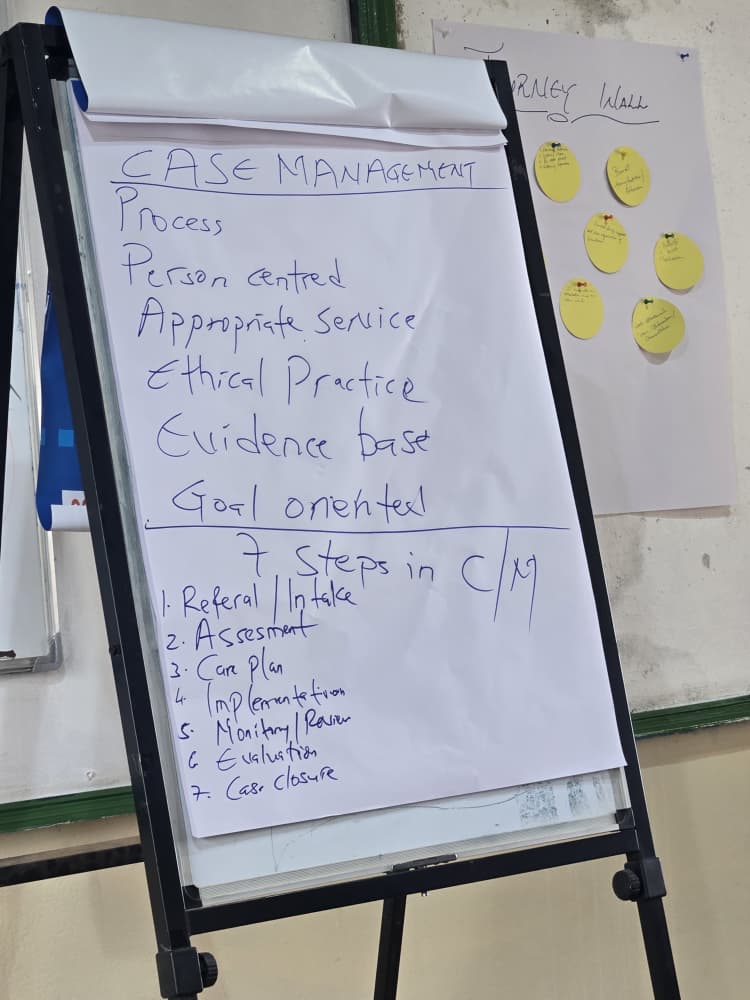
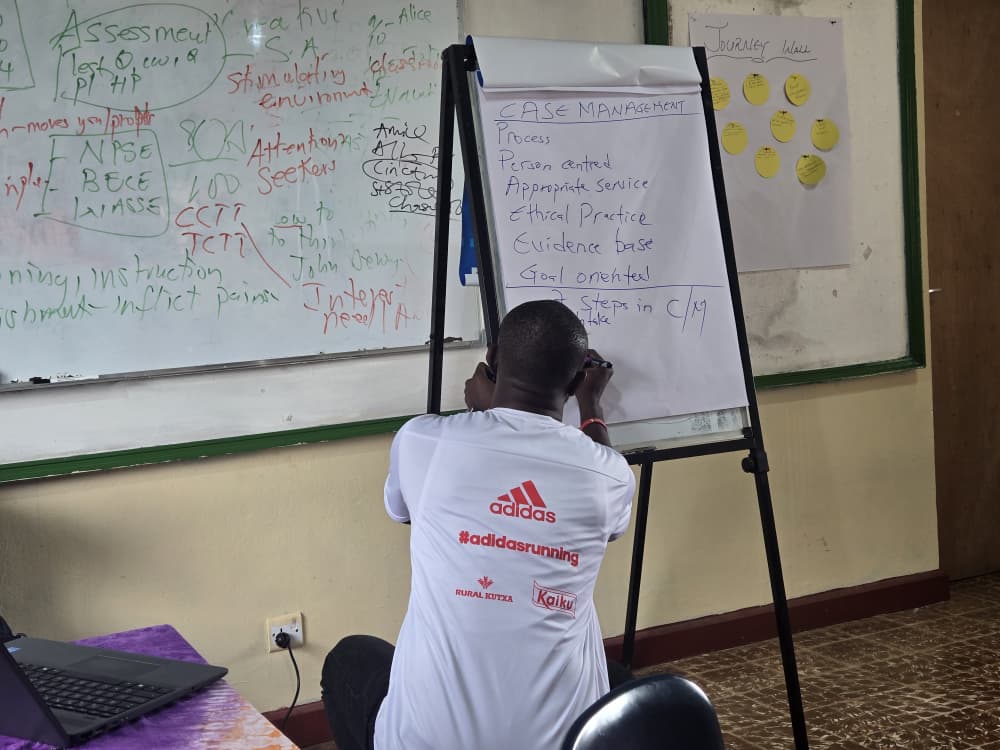
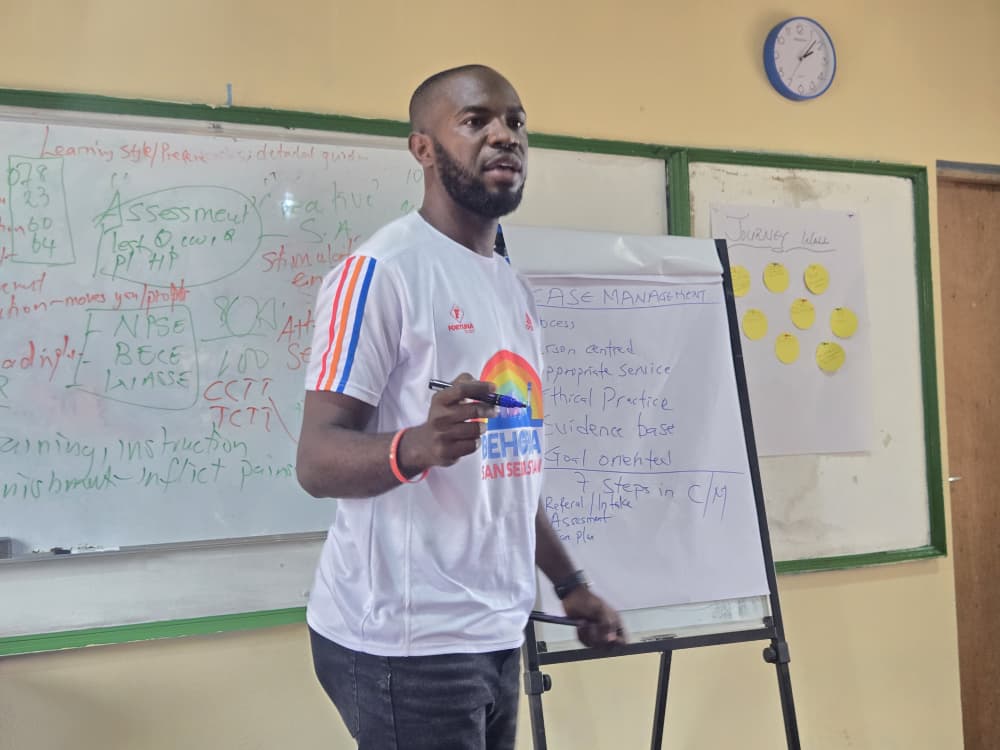
As part of the retreat, Mr. Massaquoi facilitated a session on Case Management- stressing its importance in delivering comprehensive and survivor-centred rehabilitation services. He explained that Case Management encompasses the entire process of supporting beneficiaries, from the point of referral and admission through rehabilitation and eventual reintegration into society.
He described Case Management as a structured, person-centred approach to service delivery that is guided by ethical practice and evidence-based interventions. He outlined the seven key steps in the Case Management process as: referral and intake, assessment, development of a care plan, implementation of plan such as skills acquisition, counselling, games therapy, and individual or group therapy, continuous monitoring and review of care plans, evaluation of outcomes, and case closure.
Concluding the session, Mr. Massaquoi explained that a case may be closed for several reasons, including the successful completion of the intervention plan, lack of meaningful progress despite sustained interventions, or the death of a client.
The retreat forms part of Caritas Freetown’s ongoing commitment to strengthening the quality of rehabilitation services provided through the REAR Project while ensuring that staff remain equipped with the knowledge, skills, and safeguarding practices necessary to effectively support young people recovering from Kush addiction and other harmful substance abuse.